
Awaji-Baikundo – Amacha Koh
My friend Povilas sent me a huge box of Japanese incense samples in mid-2023, including 2 of the varieties out of this set of Amacha Koh sticks by Awaji-Baikundo; apparently named ‘Buddha’s Feast‘.
Amacha is also called ‘hydrangea’ or ‘Buddha tea’.
I once had a hydrangea plant in my garden, but unfortunately, it was too popular among the snails.
Hydrangea incense sticks are the speciality of the house 淡路梅薫堂 Awaji-Baikundo; as far as I know, nobody else makes such incense sticks.
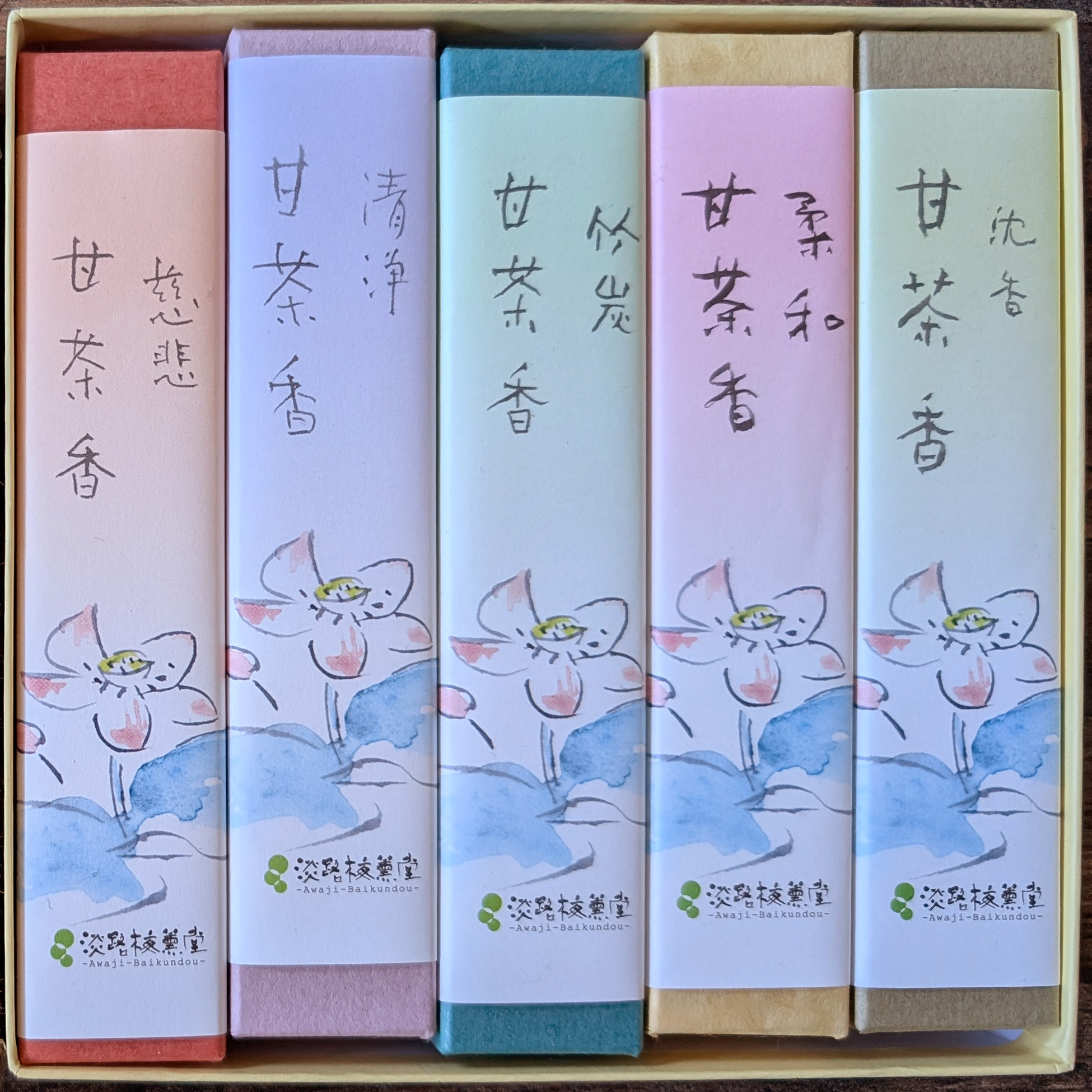
Shoujou Amacha Koh are the second box from the left (pink) at the top in the picture. ‘Shoujou’ means something like ‘pure’ or ‘clean’, which is why you sometimes find them under the name ‘Pure Amacha Koh‘. All other Amacha Koh sticks seem to be variations of this variety.
Jihi Amacha Koh are those from the red box on the far left. ‘Jihi’ means something like ‘gracious’; it’s a sweet fragrance.
In Germany, they’re not available; in the USA, you only find them at Japanincense.
They sell Shoujou Amacha Koh in a small box like from the set for $9; Jihi Amacha Koh cost $18.
Each box contains at least 25 sticks of 5.5″ (approx. 14cm) length and a burning time of about 30 minutes. Larger boxes are also available.
Here‘s a link to the online catalogue (PDF) of Awaji-Baikundo; it’s in Japanese and lists the prices in yen.
I’ve noticed that some shops use an alternative spelling: ‘Amacha Kou‘ instead of ‘Amacha Koh‘. Take this into account in your online research.

清浄 甘茶香 | Shoujou Amacha Koh
Shoujou or Pure Amacha are, as the name already says, pure hydrangea incense sticks and don’t contain any other aromatic ingredients apart from hydrangea leaves.
The raw scent is already unique. It’s quite a robust smell; fresh and slightly sweet and sour, but also green, with a fine, tart note.
The smell evokes a blurred déjà vu from my childhood, something that has to do with my grandmother.
In a certain way, it also smells slightly soapy, or perhaps like a (particular) sunscreen?
The smell when burning is quite similar to the raw scent, but without reminding me of soap or other personal care products.
The sweetness is uncommon. It’s not a vanilla-like benzoin sweetness or anything similar; rather, the type of sweetness makes me think of stevia or perhaps liquorice root.
The fresh note seems even cooler in the burning sticks than in the raw scent. The best I can describe it is ‘anise-like’, but that doesn’t really capture it. The freshness is spicy, but in a green, cooling way.
The sour note intensifies the freshness even more.
The smell of these sticks is highly unusual and belongs to the things you can hardly imagine if you haven’t experienced it. For that reason alone, you shouldn’t miss an opportunity to try Shoujou Amacha Koh.
The special freshness makes them a particularly interesting summer incense in my eyes.
I’ve found another review of Shoujou Amacha Koh. It breaks down the name quite nicely.
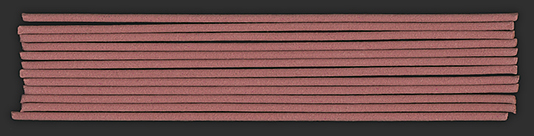
慈悲 甘茶香 | Jihi Amacha Koh
According to Japanincense.com, Jihi Amacha Koh contain amber as well as hydrangea and other ingredients.
The raw scent is surprising. Jihi greet me with a sugar-sweet and creamy fragrance, laced with a pinch of cinnamon and a slightly pungent, funky note, of which I’m not sure whether it comes from the hydrangea itself or another ingredient.
Lit, the fragrance profile appears woodier but remains very sweet and creamy.
The funky note has disappeared, but instead an idea of the green character I already described in Shoujou Amacha Koh (which I understand as the base version) comes through.
Although I no longer find the smell as extremely sugary as at the beginning, it remains a creamily sweet gourmand fragrance with fine, spicy notes.
Max, who’s just came in, says the smell reminds him of candied almonds.
I think that one of the ingredients not named could be one of the plant-based substitutes for musk. Something like Ferula moschata or Saussurea costus, perhaps.
Jihi remind me a little bit of Amethyst by Shoyeido, which contain the latter.
Jihi Amacha Koh smell just as interesting, even if their fragrance doesn’t seem quite as unique as that of the Shoujou version.
I think Jihi are an interesting pick for sweet noses who feel experimental.
I found a very old ORS review (2008) of Jihi Amacha Koh.