
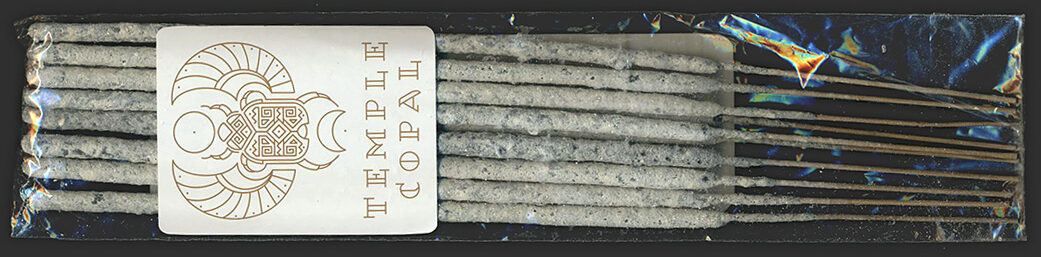
Temple Copal – Sacred White Copal
I found two packs of these sticks at the beginning of the year (2026) on Kleinanzeigen.
The previous owner had brought them back from a trip to Mexico.
I’d been curious about copal incense sticks for a while now, but they’d always been too expensive for me just to try. €12 and more is completely normal for a pack with 10 sticks.
When I researched my bargain buy, I was shocked by the original price.
A pack of these sticks is sold on Temple Copal for a whopping $26. By far the most expensive examples I’ve come across!
The pack contains 10 sticks. Neither length nor weight is given, but a burning time of 90 minutes.
I measured and weighed them once they had arrived; the length is 27.5 cm, and they weigh about 45g per pack (including the bag).
I’d already had some experience with resin incense sticks, but none of them had this unique appearance that seems typical for copal sticks: this vivid white colour, as if it were really pure resin on the sticks…
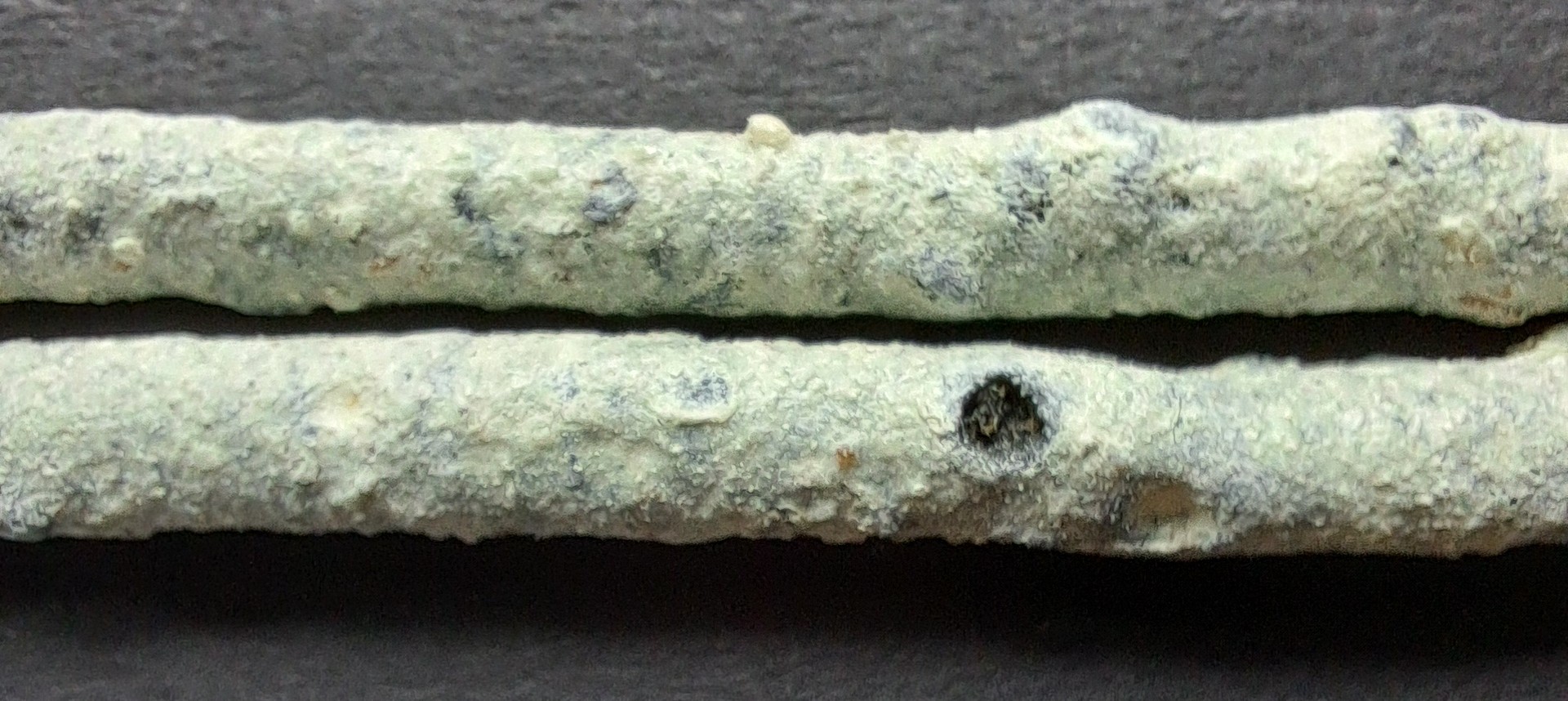
As soon as I held the sticks, I became sceptical. Individual sticks showed deep black spots, as if an air bubble had burst under a coating and the now-open hollow space revealed the interior. The layer is paper-thin. The white is opaque – too opaque for natural, pure resin.
When lighting, my suspicion became certainty: the resin has a white pigment added to make the sticks seem so radiantly white. When the resin melts, it should become transparent, but it remains opaque.
I was eager to take a closer look.
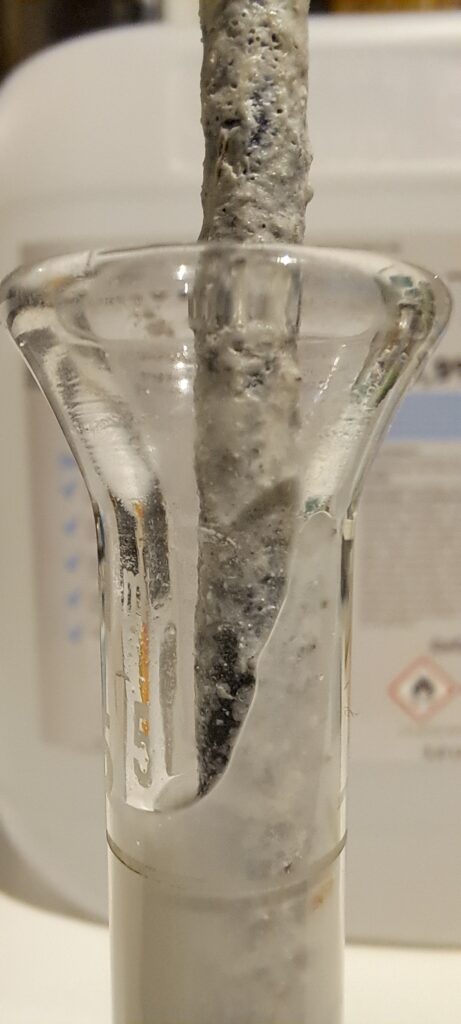
Resin dissolves easily in alcohol, so I placed a stick in a laboratory glass and poured 99.99% isopropanol into it.
The coating started to dissolve within seconds and the liquid turned white. I let the stick soak for about 10 minutes, moving it repeatedly.
After removing it, I gently tabbed it dry and let it completely dry off overnight.
The stick didn’t quite fit in the glass, so the lower third remained unchanged. Now you can see a clear transition from white to black.
The sticks are indeed coated with only a very thin layer of this resin-pigment mixture. The inside appears to be charcoal.

The initial weight was 3.69g.
After ‘washing’, the stick weighed 3.45g.
That’s a difference of just 0.23g.
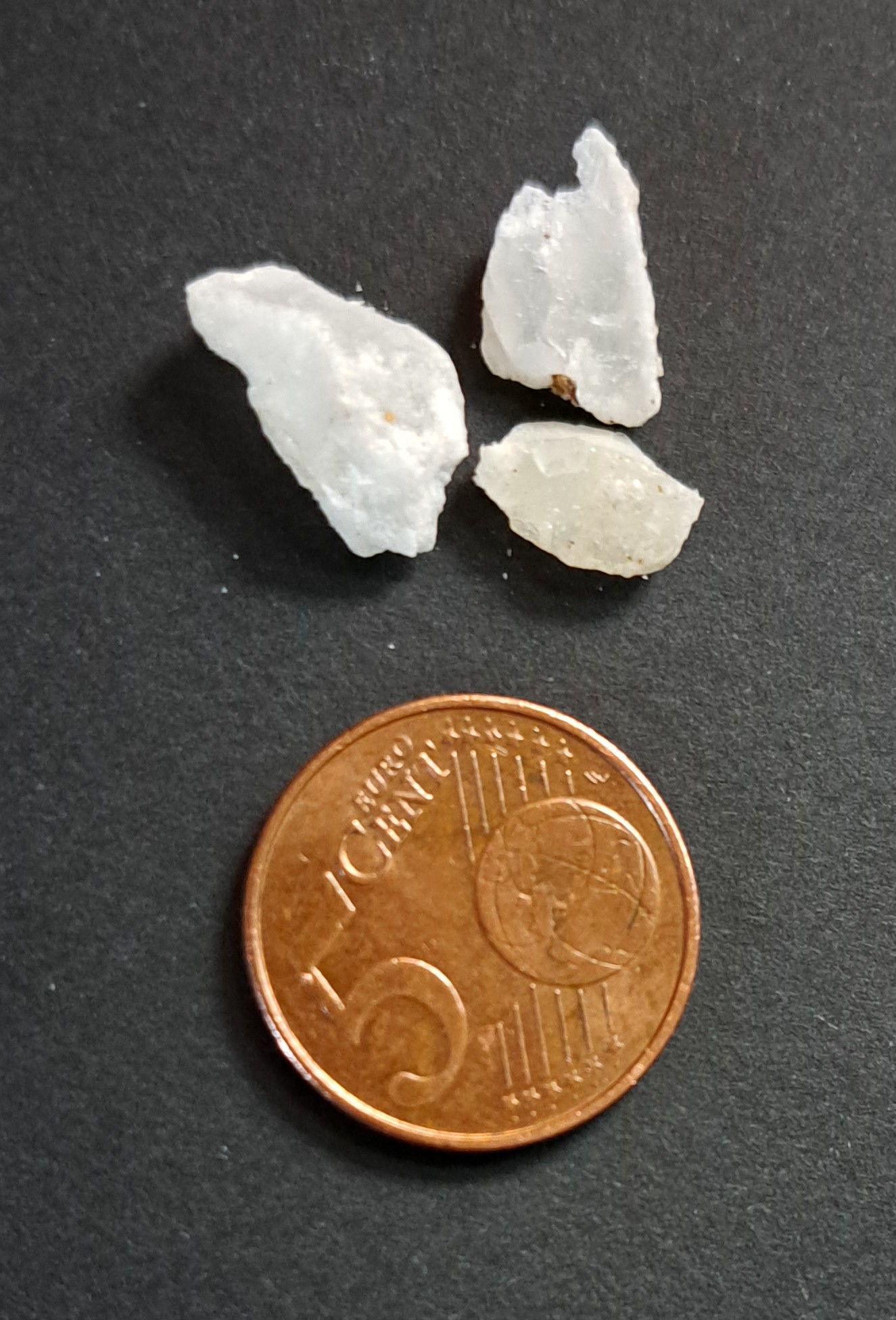
Considering the resin that remained on the stick, one could assume that a stick is coated with approximately half a gram of copal (and pigment), being generous in calculation.
That’s about 5g white copal per pack.
This is what 0.5g of White Copal (Bursera bipinnata) look like:
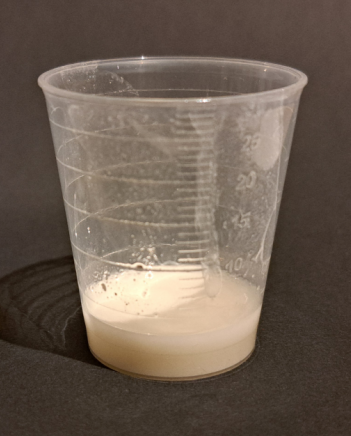
The remaining solution looked almost like white ink, which gave me the idea of pouring the liquid onto black crafting paper and letting it dry.
I let the pigments settle overnight, then decanted the clear liquid into a second cup and emptied the remaining mixture onto black paper.
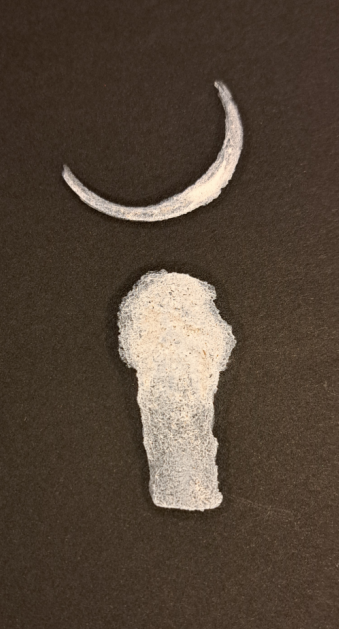
The next day the alcohol had evaporated, and the paper had a faint but lovely fragrance of white copal.
From the cup with the clear liquid, I also let the alcohol evaporate to see how much resin would remain.
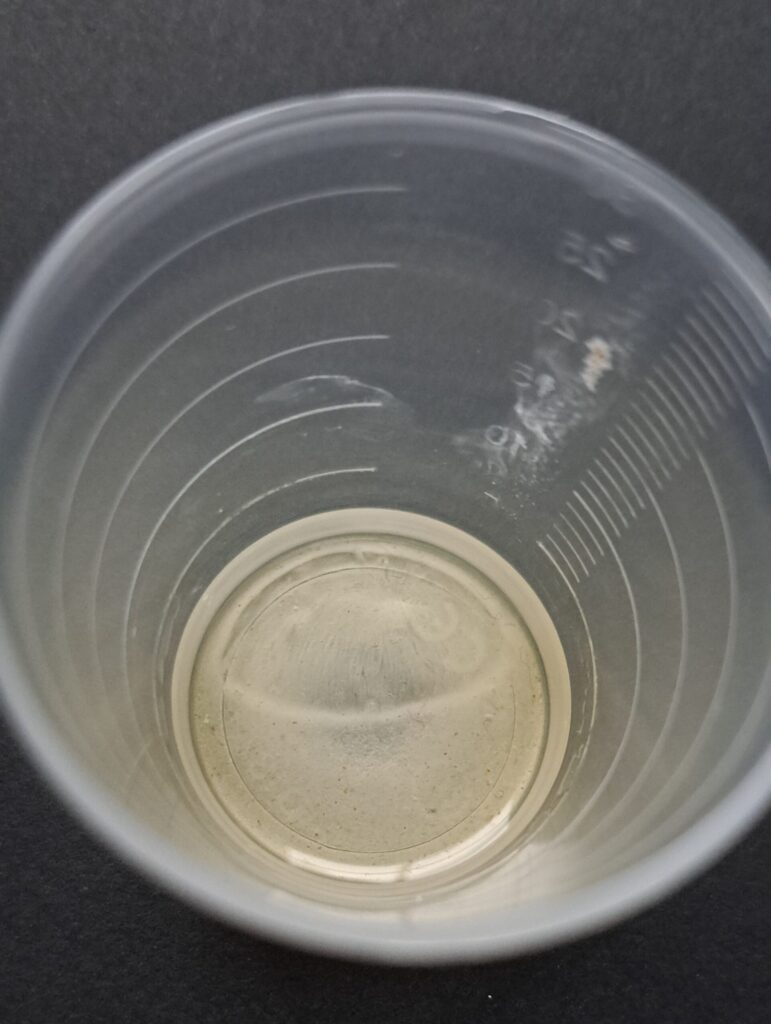
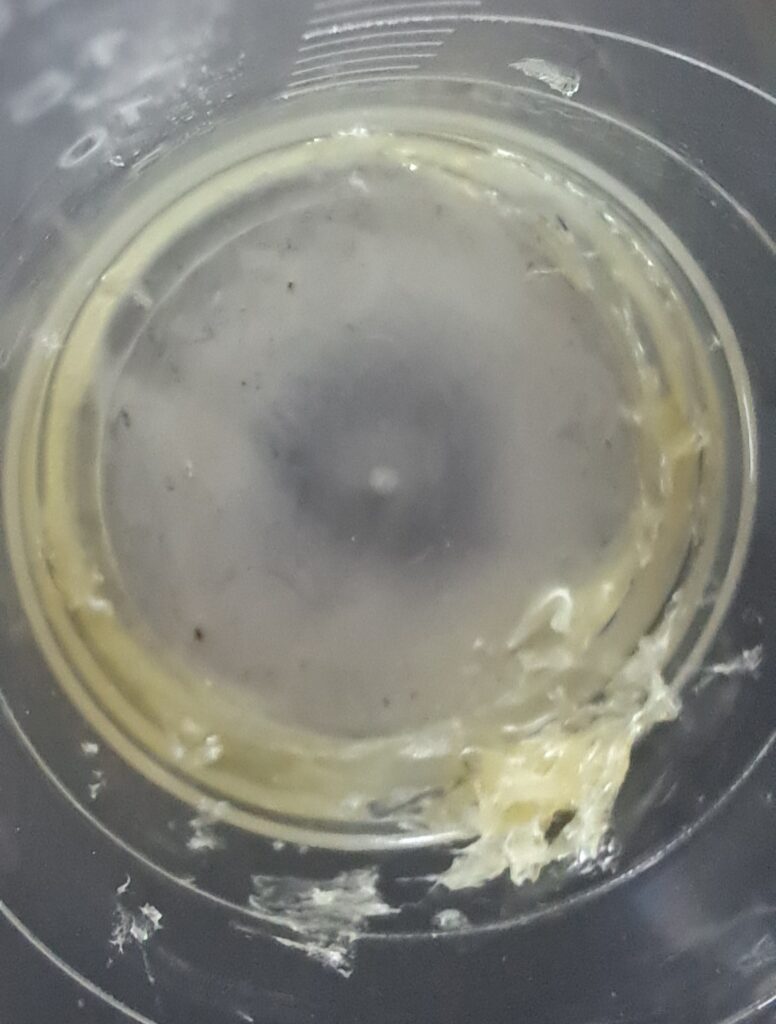
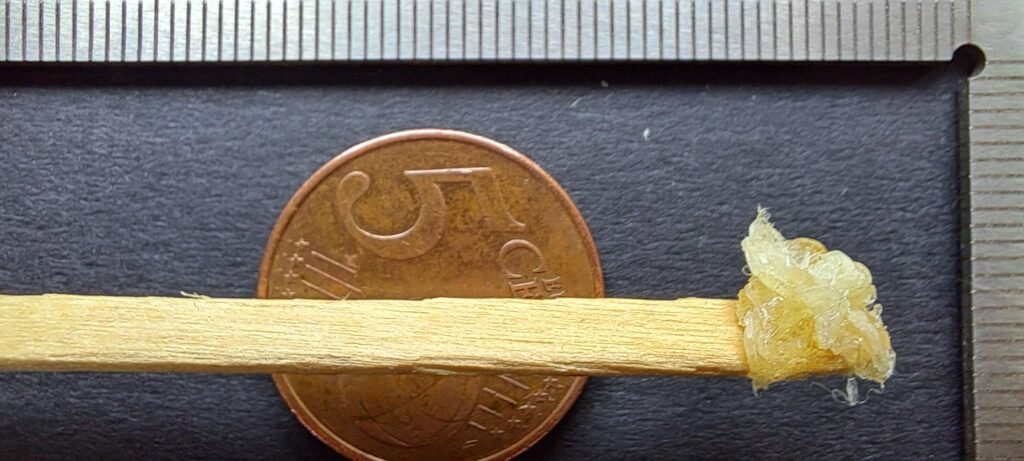
This is all the resin I could scrape out of the cup.
What Temple Copal say about their incense:
This copal comes from different cooperatives from the states of Oaxaca, Guerrero, and Hidalgo, México.
We offer the purest & highest-quality copal resin available. Exposed to the air longer, our copal hardens from a yellow sap-like state to a white rock-like resin. This maturity gives it a more potent piney aroma and a powerful clearing & cleansing ability. Where others claim to be white copal, we truly hold the standard, valuing quality and transparency.
Additionally our sacred sticks are hand-dipped fully-coated in the pure resin. We do not “cut” our copal by adding any filler material, nor do we drizzle or dust apply our copal onto the stick.
TEMPLE COPAL is made with 100% Pure Ceremonial-Grade White Copal – no fillers, no additives, no skimping on the resin. Each stick offers a 90+ minute burn time; put-out and re-light as you wish.
Temple Copal is a “wild-harvest” product that does not require agricultural exhaustion or deforestation. Copal is a naturally occurring tree resin that drips and is collected from the Bursera bippinata tree. No trees are killed during the sap collection process and no land is cleared to grow or farm copal.
WHITE copal is the most scarce & most valued of all copal resins as it has naturally aged the longest. […]
The text is really cleverly worded, especially the part ‘Additionally our sacred sticks are hand-dipped fully-coated in the pure resin.’ You might think they mean the carrier stick – but no – it’s a charcoal stick, weighing approximately 3.5g.
And ‘additionally’ to what? Apart from coating the sticks, nothing is described about the manufacturing process.
In their detailed description, not a single word is mentioned of the charcoal. Nor about the pigment with which their ‘uncut’ resin is mixed.
They write about transparency, but their promotional text is as opaque as their dyed resin.
How much they emphasise the white colour is quite funny. Apparently, the naturally white colouration of the resin wasn’t enough to cover up the charcoal.
Based on the smell, I’m confident they actually use Bursera bipinnata copal, and it may indeed be of the highest quality, but the sticks contain only an estimated 11% of it.
So you’re effectively paying $26 (currently €22.77) for (estimated) 5g Bursera bipinnata resin and a generous amount of charcoal.
For comparison, here are the prices from a couple of good incense retailers:
- Jeomra’s Räucherwelt (DE): 8,90€ for 25g
- Resinae Botanica (UK): 9,12€ for 20g
- Apothecary’s Garden (CA): 13,14€ for one ounce (28,34952 Gram)
With what I know about incense manufacturing and the vague information from the text, I suspect the sticks are made by dipping hand-made ‘blanks’ (consisting of bamboo sticks coated with charcoal paste) into an alcohol solution of copal resin and pigment; often enough for the coating to become opaque, like a glaze.
The pigment used could be titanium oxide.
On the Instagram profile of Temple Copal, the latest post from 23 June states that they’re currently working on a rebranding. In future, Temple Copal will therefore be sold in different packaging.
It looks like they’ll also be changing the logo.
Finally, let’s get to the scent:
The raw sticks smell resinous; not very intense, but recognisably of Bursera bipinnata.
Lighting a stick isn’t difficult; the charcoal under the thin layer of resin quickly starts to catch an ember.
The smell is resinous, but by far not as intense as such a thick stick would suggest. The amount of smoke produced is also rather moderate.
I think you can recognise it as copal, but it’s far from reflecting the complexity and beauty this material has to offer.
I smell a pungent smokiness that comes with most resins when you burn them on charcoal. And you can smell the charcoal base quite intensely.
Even when I burned a stick outside on the balcony, the charcoal smell was pretty apparent, as if a neighbour were just firing up the BBQ.
These sticks’ price and marketing are really cheeky for what you get.
I very much hope this isn’t the standard manufacturing method for copal incense sticks.
Have you tried any copal incense sticks? If so, how were your experiences?
This is a great post! The level of detail and work you put into this is exceptionally informative. There are so many unimaginable ways that companies can use to cut corners to compete and maximize profit.
Making real plant incense and not cutting corners makes you non-competitive. It’s really difficult to get even a crumb from the industry when companies are willing to do anything to reduce costs.
I really don’t know what small businesses who produce honest products can do to compete and it’s only going to get worse. Especially with AI.
Thanks, Dave!
I know you got hit hard with the fraudulent IA machinery lately (and are still fighting). I hate that this happened to you!
Hopefully, I can at least do a little part by exposing the offenders and shine a light on the good stuff out there.
The pigmenting thing is terrible! And TBH, something really skeeves me out about this entire genre of incense, especially as so many of them co-opt a south and central American indigenous aesthetic no matter how tenuous their connection to those cultures are. It strikes me as appropriative.
I was shown by that Ethiopian frankincense stick that you can absolutely make a decent resin + charcoal stick by dissolving the resin in alcohol, so it’s a real shame this one is so underwhelming for the price.
Yes! I recall seeing a box of incense in a store that featured an actual feather and images of a dreamcatcher and other American indigenous imagery. I picked up the box “Made in India”. So strange!
Yeah. If they are at least made in those countries, I’m kinda ok with it, but there are so many of those “smudgeing” incense sticks coming from India now. I have a feeling they are all just a fancy facade. And the marketing really rubs me the wrong way.
I got a couple of samples of such examples.
I’ll look into them because I want to get a feeling for that genre and will use the chance to expose BS if needed, but overall, I want to give them as little platform as possible.
I straight out refuse to review stuff like the ones Dave mentioned. (This must be Hari Darshan, or the Green Tree white-label version of that. “Tribal Soul” or something along those lines.)
Yes, those Ethiopian Frankincense sticks are a perfect example. They are rustic and “simple” but in an authentic and well-made way.