
Kneaded Goose Pear Tent Incense From AliExpress
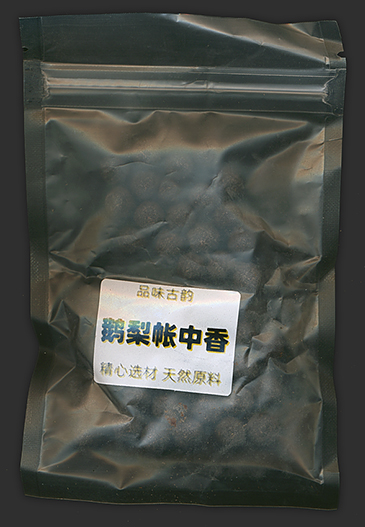
After I’d tried some Goose Pear Tent incense sticks from AliExpress, I was curious to also try a kneaded variant. Especially since the recipe is originally for kneaded incense.
I bought this bag with 20g or approximately 50 pellets at a shop called Goodness Cloud Pavilion Store, at which I and also my friend Povilas (who often sends me samples) have already shopped multiple times.
The (now gone) listing included other fragrances that all cost the same. I paid €7.60 for the bag.
The original Goose Pear Tent recipe is a mixture of agarwood and sandalwood powder that’s filled into a hollowed-out quince (Goose Pear) and steamed in it.
The juice and sugar contained in the fruit and probably its pectin seep into the powder, lend it a special aroma and make it possible to form it into small pellets.
Part of the fruit flesh can also be integrated into the incense dough.
I consider it unlikely that these Goose Pear Tent pellets are really authentic, if only because of the low price. But that doesn’t have to mean they’re bad.
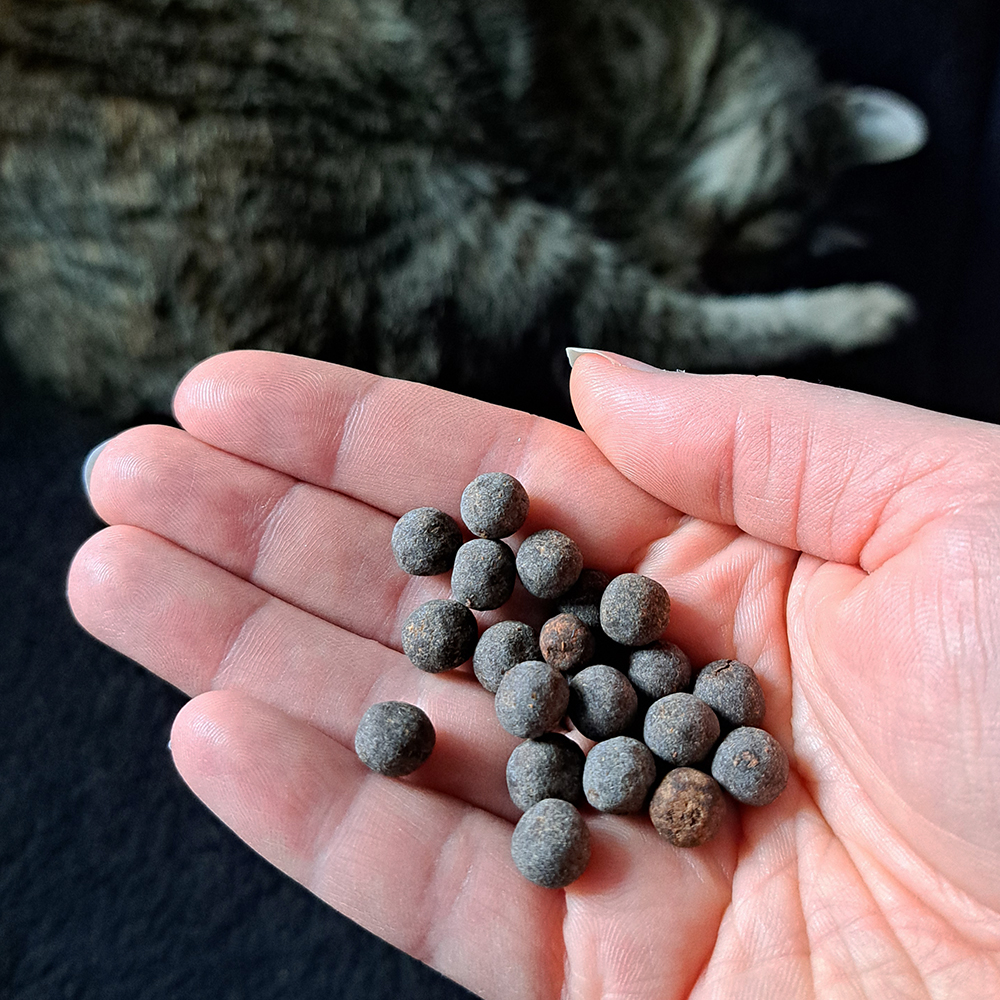
The pellets are mostly of equal size, approximately 8mm in diameter.
They have a whitish, matte surface. I’m not sure whether this is a thin powder coating or perhaps caused by oxidation.
The pellets are relatively dry, but not completely hard.
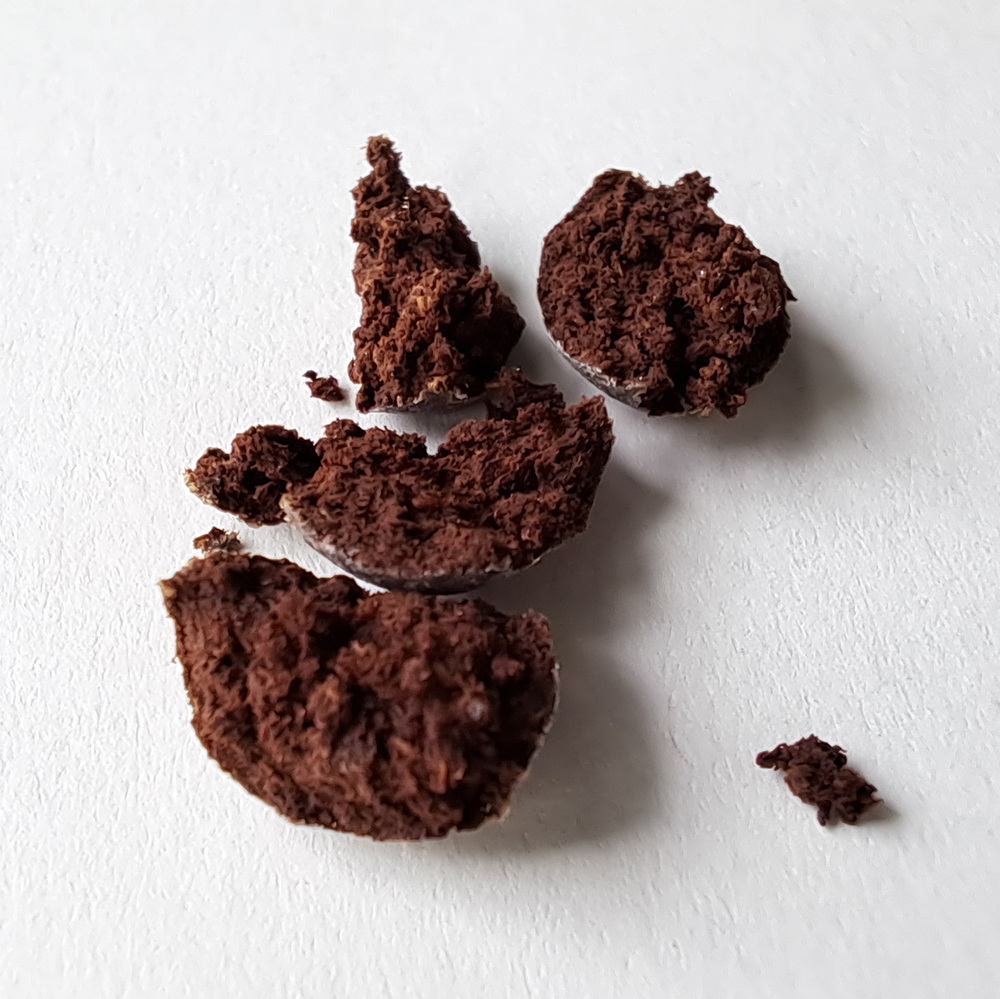
They can be crushed between the fingers and then break apart.
The consistency is then rather crumbly.
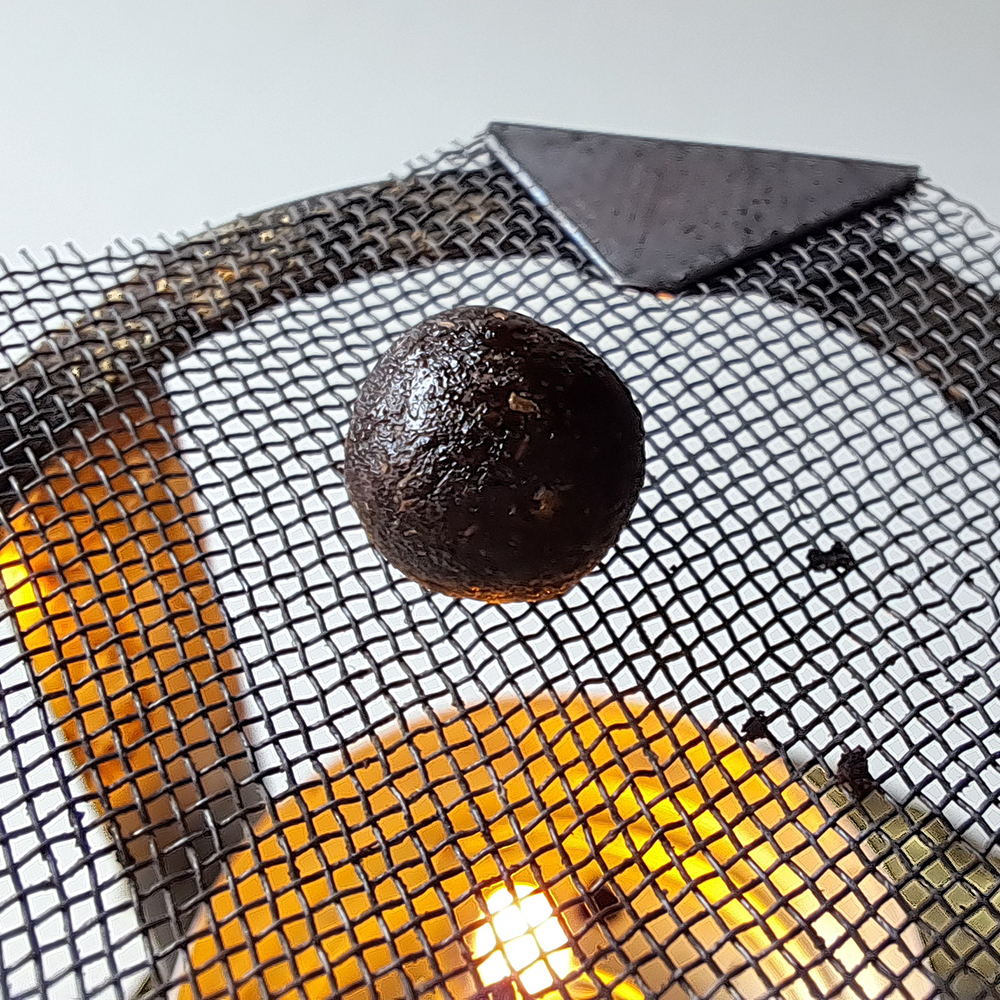
If you heat the pellets, they get glossy.
If you take them from the heat source at this point, they remain shiny, and even after cooling they remain slightly sticky.
Perhaps it’s a sugar coming out?
If you leave them on the warmer, it doesn’t take long until the pellets look matte again.
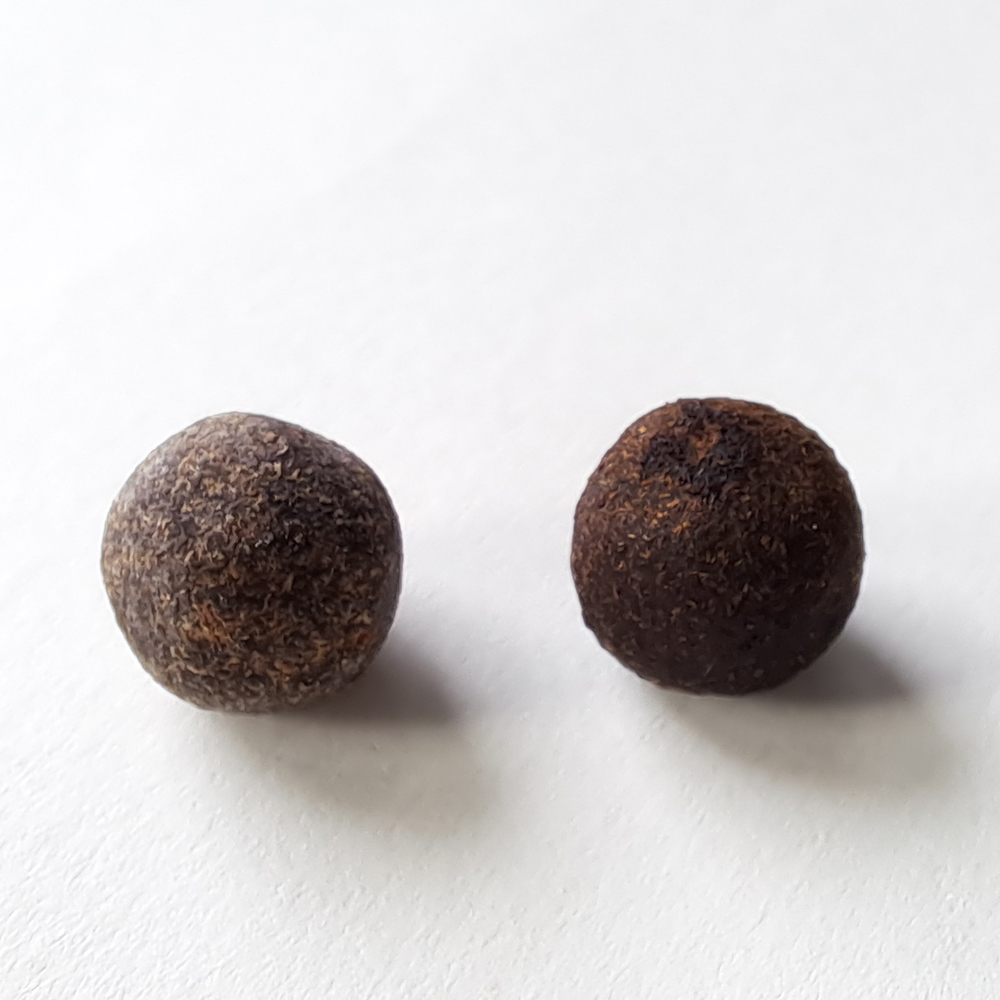
Here you can see a fresh (left) and an almost spent ball (right) in comparison.
The pellets lose their whitish matte appearance after heating and become darker until they’re mostly black.
At that point, they can’t be crushed any more.
I use a tealight incense heater for these incense pellets.
I find the aroma of these Goose Pear Tent pellets refreshing; however, the fragrance also has a certain warmth to it.
The raw scent that rises out of the bag is fruity, sweet and juicy, with a slightly watery freshness. The fragrance strongly reminds me of honeydew melons.
The aroma of the pellets when heated is a little weak; I quickly moved on to using them in pairs. That way, the intensity is sufficient to pleasantly scent my living room.
The smell on the heater is again very fruity, but less specifically like melon. The watery-juicy character of the fragrance persists.
Added to it is just a trace of woodiness that’s so minimal that I keep wondering whether I’m only imagining it.
At the beginning, the pellets smell the freshest and the most watery; then the fragrance becomes a bit sweeter, fuller and the fruitiness intensifies.
At the end, some tartness is added, or a note of browning sugar as well as a certain roasted aroma.
In all phases, I perceive a trace of something perfume-like, even though I don’t find the smell itself perfumy or synthetic. However, I’m pretty sure that these pellets are perfumed in some form, or that some perfumery molecules got used here.
Povilas gave me a perfume cream a while ago (also bought on AliEx) that exudes exactly this watery freshness that I find in the different Goose Pear incenses.
This perfume cream, however, is sold as ‘Agarwood’ fragrance. Povilas has told me that he’s also tried the Goose Pear variety, but that he finds that the Agarwood one, with its watery, cooling fragrance, smells more like Goose Pear than the actual Goose Pear variety, which is more floral and lacks the cooling fragrance.
Unsurprisingly, these perfume creams contain exclusively synthetic fragrances.
The goose pear pellets performed exactly the same way on the incense heater for me as you described. As far as how I think they have (or have not) been made and what they might contain, this is my assessment.
I doubt that these pellets were made by steaming them in an Asian Pear or Quince. First is their fragrance. I have found that any trace of watery pear fragrance evaporates as the pellets dry. To be fair, I have never had access to a truly fragrant quince for steaming the powders. I have made about twenty-five batches using Asian Pears or the only quinces that are available to me, which unfortunately lack fragrance. I have a friend in California who has a fragrant quince tree growing in her yard. This year, she has agreed to steam some powders I send her using the method. I will report back by late 2026 on whether dried pellets she makes have any fruity or watery aroma.
Aside from the faint scent that you mention, this pellet is nearly, even remarkably, unscented. This suggests to me that the sandalwood and agarwood they were using, if the maker even used sandalwood or agarwood, was very, very low grade. Pellets I make with mid- to fine- quality woods are highly aromatic, as the steaming opens their cellular structure making their fragrance readily available.
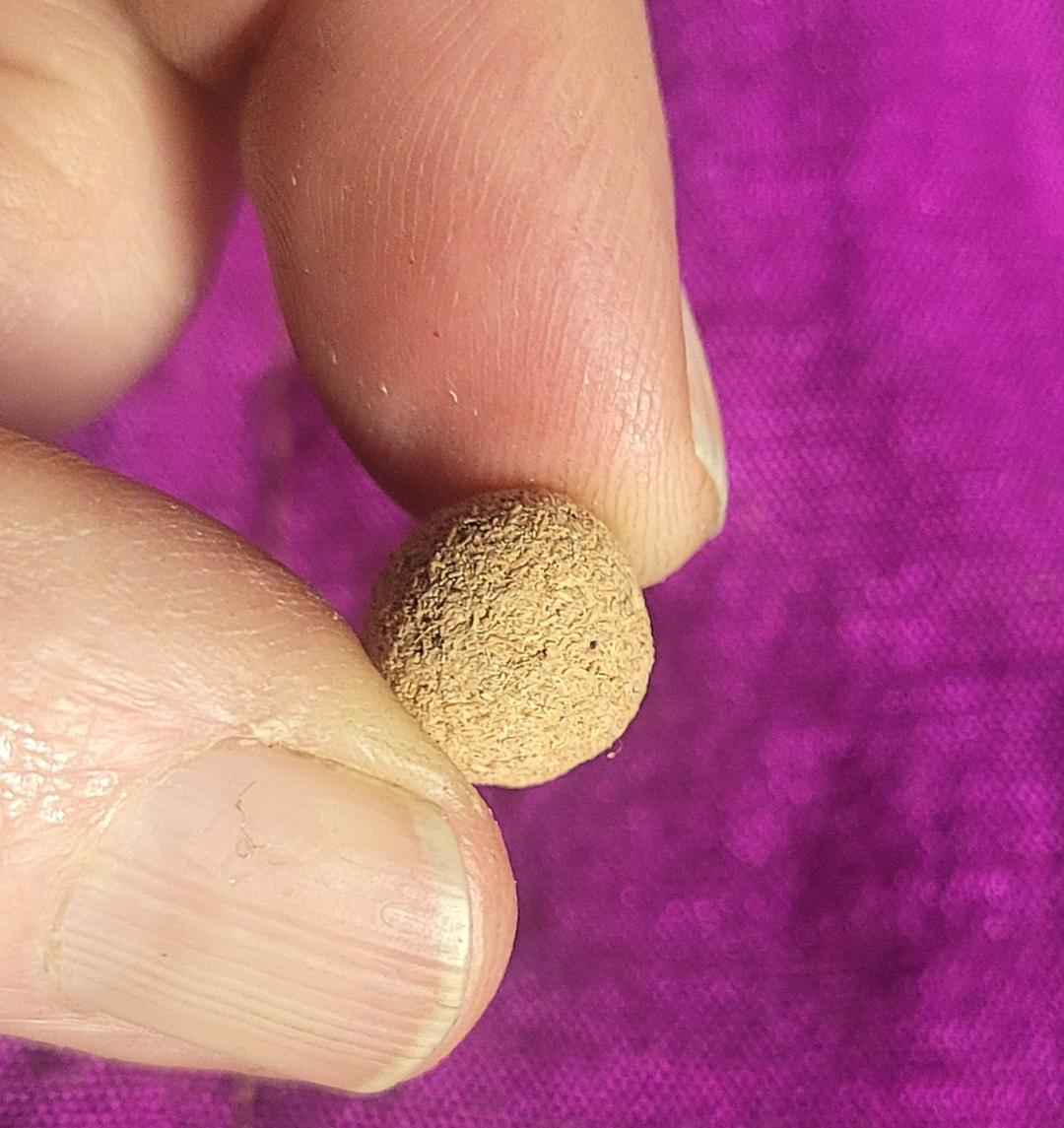
None of my pellets have ever appeared shiny when heated or had a white bloom on their surface in storage. All my goose pear process pellets have a very matte surface, not smooth at all, and have a fine yet rough exterior.
These characteristics of the pellet lead me to believe that honey or syrup was used as the binder. Especially since the pellet forms a little liquid pool around it when heater. Something that happens sometimes times when honey is the binder and you use too much but never with the pectin binding that happens in the Goose Pear method.
To heat the sample pellet, I used an electric kodo cup. Trying to get a whiff of scent, I moved the cup closer to my nose and started coughing. To me this is a sign that there is definitely some sort of perfume in the pellet, likely synthetic.
As a note for incense artisans reading this comment: I know that in some formulas the makers suggest adding in some of the fruit if the powders will not bind after the steaming. I have found this to be a very bad idea unless you are going to use the pellets right away. Every batch that I added fruit grew mold after a couple of months.
Thank you so much, Bonnie, for this thorough comment!
Bonnie provided me with a picture to show what her Goose Pear incenses look like:
Thank you, Bonnie!
I thought these were quite nice. I also didn’t get any woodiness from it. The texture caught me off guard because I usually flatten kneaded incense before putting it on a heater.
I sent some to Bonnie as well; very curious what she will have to say about them, as someone well seasoned in making this sort of incense.
I’m not expecting her to like them, as I know how repulsed she is of synthetic fragrances, but I’m looking forward to learning her verdict. Especially on how she thinks they have (or have not) been made and what they might contain.