

Aromanza – Maya – Naranja Pimenta „Atracción“
I got one of these sticks from Steve as a gift in mid-2025.
At the beginning of 2026, I ordered from Ephra World and offered Steve to include some stuff for him as well, since I was sending him a parcel anyway.
He said I should take a sample of all his stuff for myself. So, without noticing it straight away, I came by another stick.
Aromanza is an Argentine brand; the manufacturing company is called Iluminarte.
A pack with 3 of these enormously thick sticks costs €6.45 at Ephra (€2.15 per stick). They’re approximately 22cm long. The burning time is given as 75-85 minutes.

When I discovered this finger-thick stick in Steve’s parcel, I was, of course, impressed by the size at first, but when I picked it up, the weight made me pause: it was the same feeling as picking up a film prop like the foam rubber mock-up of a giant sword that looks deceptively real but is simply far too light-wight.
Don’t misunderstand me – such a stick weighs in at 8-9g after all, but measured against its size, it should weigh more if it’s made with a lot of resin.

Having come by a second specimen gave me the opportunity to sacrifice one for dissection. So let’s take a closer look at this monstrosity…
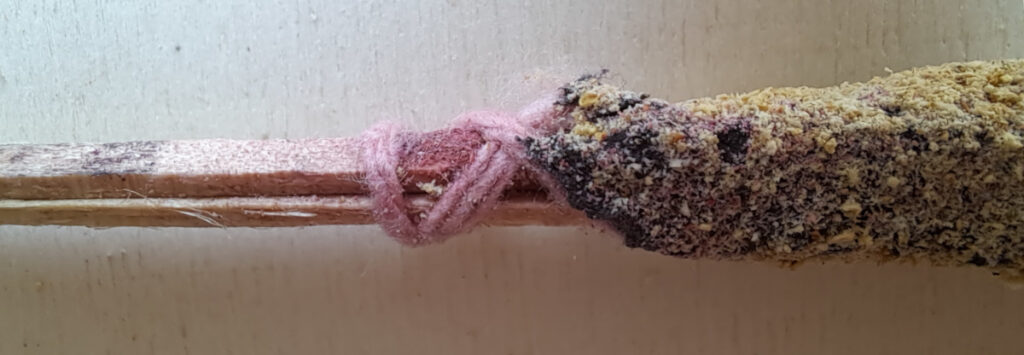
The stick doesn’t consist as usual of a single splint, but of three flat wood sticks that are tied together with string.
At first, I thought the pink cord at the bottom had stained the dough, but it’s actually the other way around.
Inside, one of the three sticks is coated with a red-dyed dough; the other two are bare. This dough has discoloured the string.
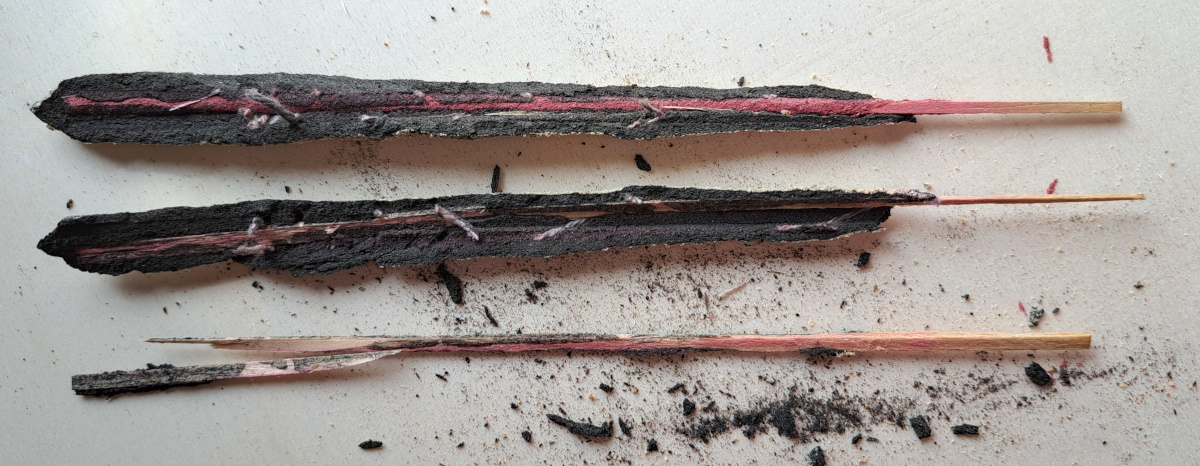
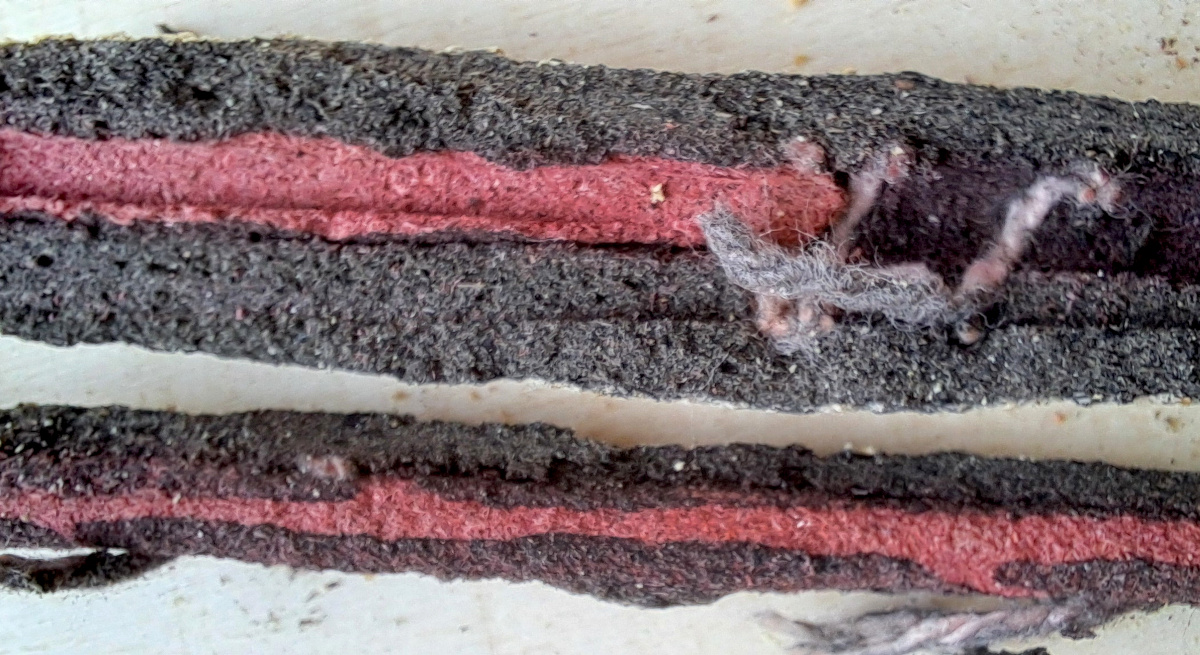
It was surprisingly easy to cut the stick in half. I’d expected an enormous mess with plenty of splinters and crumbs, but it felt almost like cutting papier-mâché or an egg carton.
One theory I had was that the sticks inside were wrapped with a lot of the string to achieve this substantial thickness without spending much incense material. However, the cord really only serves to initially hold the sticks together.
The dough, on the other hand, is exceptionally ‘airy’. The consistency reminds me of the retro incense cones by Knox.
My best guess as to how this consistency comes about:
A potent binder or consistency agent must be used. Something that can bind a lot of water and after evaporation leaves behind an almost spongy dough structure.
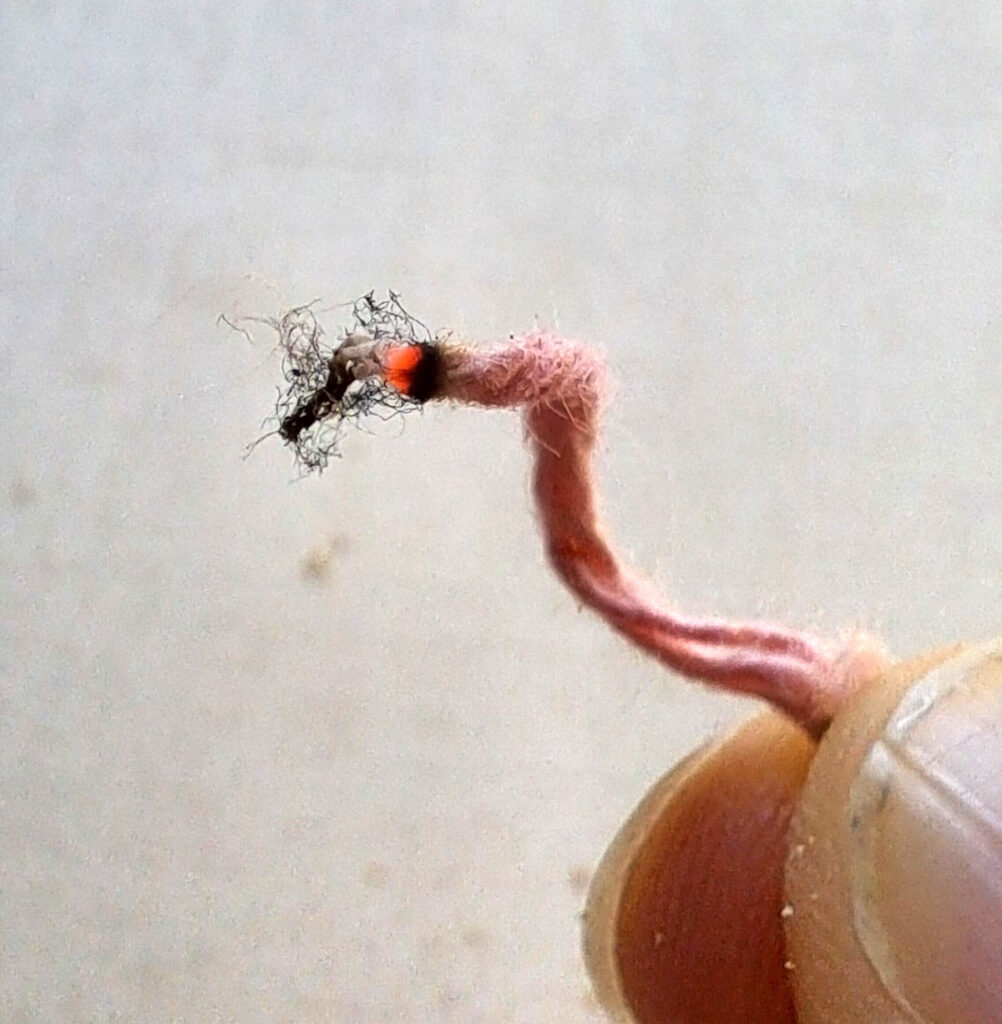
The cord is made of a combustible material; cotton, according to Ephra World, just like candle wicks are.
Upon closer inspection of the second stick, I noticed that one of the three sticks must be coated with a different dough in addition to the outer coating.
It’s again dyed, but in a much less flashy colour of a pale yellow.
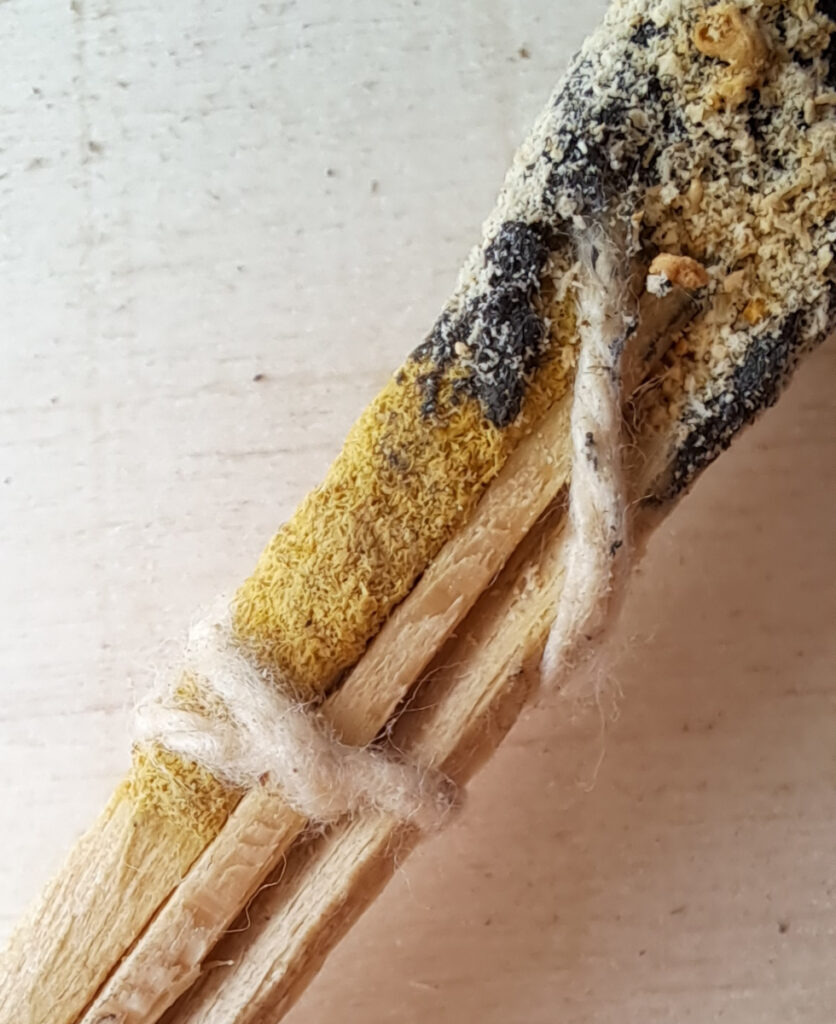
The raw scent of the sticks is perfumed and soapy; the newer one smells somewhat sweeter, with a light freshness and a hint of florality. The older one smells almost purely tart-soapy. In both cases, the aroma beyond the soapiness isn’t definable.
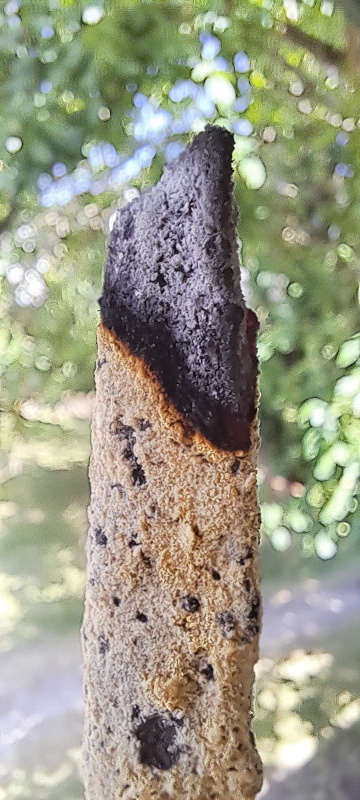
I burned the second stick outside, on my balcony.
The smell after lighting is smoky, but not as I had expected. It’s not the sooty or a BBQ coal recalling smell you often get from charcoal-based incense sticks. Instead, it’s a vague wood smoke smell, with off-notes of damp cardboard and a hint of burning hair. I find myself again reminded of Knox retro incense cones.
It’s not really like campfire smell; more like someone burning fruit crates.
The aroma is quite weak, which I honestly can’t regard as negative, as what I do smell of it is just as soapy, perfumed and undefinable as the cold throw.
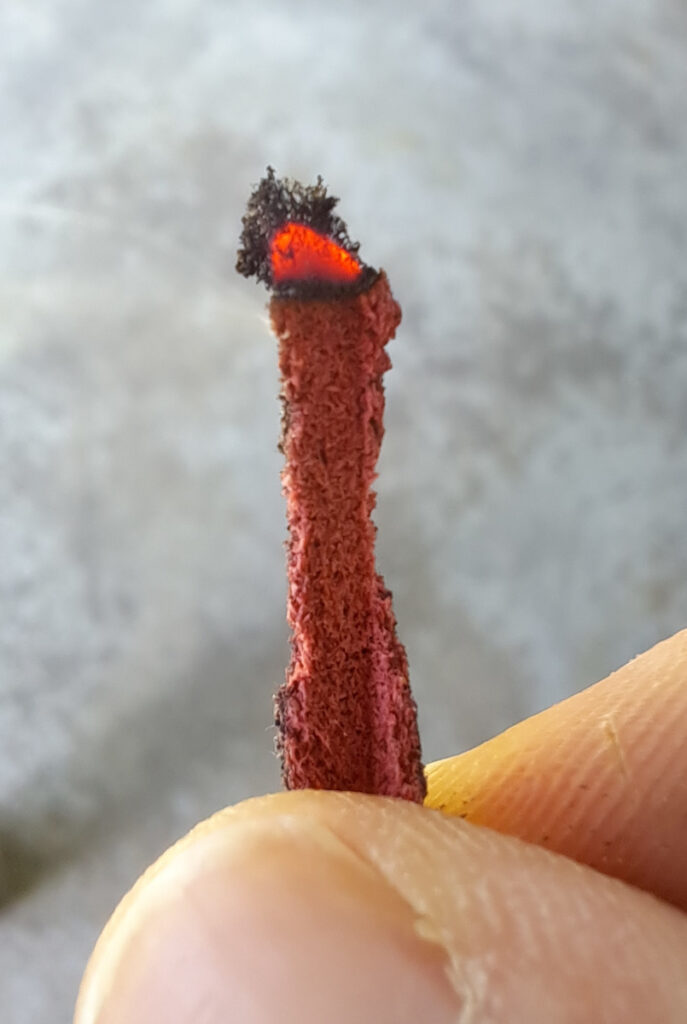
Out of curiosity, I lit a small piece of the dough from the other stick’s insides.
The aroma on that seemed stronger, more like the raw scent of the newer stick. Additionally, I had the impression of smelling fewer off-notes. But perhaps only because there’s much less material burning at once.
Conclusion: Much for the eye, little for the nose
With Aromanza – Maya – Naranja Pimenta we have yet another example of incense sticks that look like a lot and put on a natural appearance, following the trend of ‘smudge’ incense sticks. Though, by the time you light them, the façade crumbles.
I couldn’t find the slightest trace of the applied resin in terms of smell, it appears to only serves decorative purpose.
The fragrance seems to be based purely on perfumes; everything else is off-notes.
The manufacturing method is curious and leaves questions open. (Why two different layers? Why only on one of the three sticks? Why three sticks? …)
They are, as we say in Bavaria: ‘Not nice, but rare!’ 😉
Wow, weird stuff!
Yeah, right?
How do you even come up with something like that?