
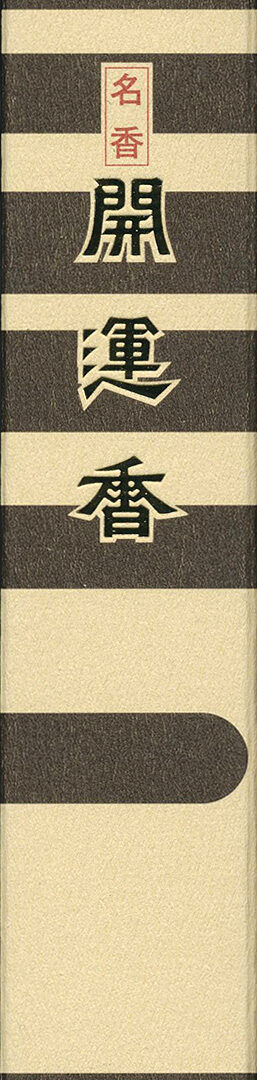
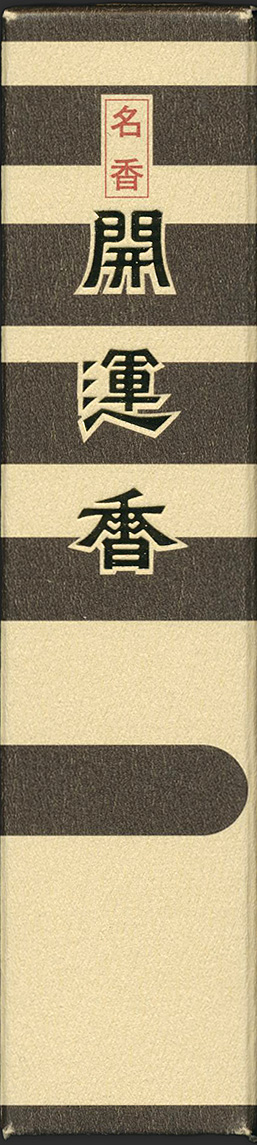
Baieido – Kaiunkoh
Kaiunkoh is one of the newest additions to my collection. The variety seems to be amongst the most popular by Baieido and is a genuine classic.
Although I’ve realised in recent months that Baieido’s classic fragrances don’t suit my taste, I was still curious. When I discovered a mint-condition pack for a good price on Kleinanzeigen at the beginning of the year (2026), I couldn’t resist.
Prices for Kaiunkoh vary greatly in Germany. Padma Store charges a hefty €26.95, whilst Klang & Stille only charges €14.90 for the small box. They also offer the long version and a large pack.
In the USA you pay about $20.
For those willing to order directly from Japan, Wa no Kaori offers a small box for €7.95.
Curiously, the different shops can’t agree on the number of sticks. Information varies between 40 and 62 Sticks per pack. Wa no Kaori state it’s 55.
Since my pack is now missing quite a few sticks but still contains 41, I think the higher figures are more accurate.
The information regarding burning time is also odd. Where it’s provided, it’s given as 30 minutes, but mine burn twice as long.
The sticks of Kaiunkoh (also written Kai un Koh, or rarely Kaiunkō) aren’t just thicker than Japanese incense sticks usually are they also have a rectangular profile. However, this doesn’t noticeably affect smoke output.
You often read that Kaiunkoh is popular incense in Buddhist temples.
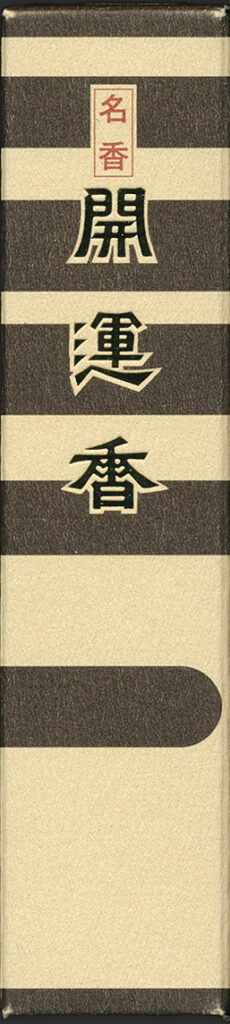
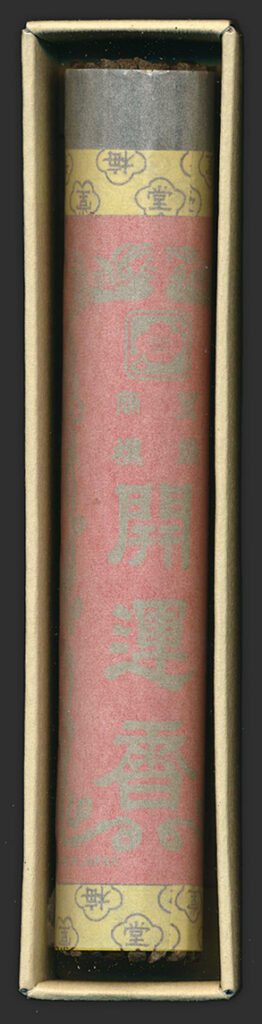

Ingredients: Vietnamese agarwood, borneol, camphor, cassia, clove, sandalwood and others.
The raw scent of the sticks is a true camphor bomb. You smell it even without opening the box, and its scent has quickly spread to the entire tin in which I keep smaller packs of Japanese incense.
Sniffing directly on the sticks, I additionally perceive a fine acidity and a sort of bread-like savouriness with spices.
When I lit the first stick of Kaiunkoh, I immediately regretted buying the box. The two versions of Kobunboku had already shown me that Baieido‘s traditional style isn’t my thing.
The smell was smoky and with its spicy and at the same time dry quality, it felt almost harsh.
Keeping in mind the learning curve which many Japanese incense sticks have, I didn’t abandon Kaiunkoh straight away and already on the second and following attempts, I could pick out ever more of their aroma.
One of the first aspects I perceived was a sour smell accompanied by the freshness of camphor.
This was underlaid with deep, woody notes and an earthy spiciness.
The fragrance concept, especially the acidity, reminds me strongly of ‘Tibetan’ incense sticks, or generally those from the Himalayan region.
Though, the smoke still reminded me of cigarette smoke, the most strongly immediately after lighting a stick, but also in between.
Then Germany’s first heat wave of 2026 set in and temperatures rose rapidly daily above 30°C;
This is weather in which many incense sticks start to smell ‘suffocated’, somehow dull.
In those days, I experimented with a few new additions to my collection and discovered that those with camphor or borneol work remarkably well at these conditions.
Often I smell camphor almost exclusively in the cold throw; when burning, it’s more that it remains invisible but ‘lifts’ other ingredients. In the heat, it became clearly perceptible for me, with a pleasantly cooling quality.
With this discovery, I straightaway pulled out Kaiunkoh—which are undoubtedly the most camphorous sticks in my collection, and lo and behold: that day I found them really good for the first time.
The unpleasant smell reminiscent of cigarette smoke is practically gone now. I can only find it if I stand directly in front of the burning stick right after lighting and catch a plume of smoke.
In the room, the aroma is sour, fresh and camphorous cool.
Although I have my issues with clove in incense sticks (an ingredient that seems to smell smoky and harsh per se for me), I now find a pleasant spicy freshness in Kaiunkoh that I attribute to the cloves.
The underlying aroma is restrained but nonetheless complex. An inseparable mélange of dry woodiness, spices and a deep, calm, earthy tone.
It’s the spicy proportion that brings forth ever more facets for me. When a fresh rush of wind comes in from the window, it happens that the fragrance returns to my conscious perception and presents itself to me in a new way.
Since this discovery, Kaiunkoh have become my go-to incense sticks for really hot weather.