
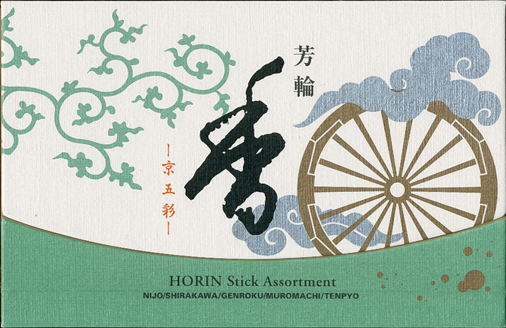
Shoyeido – Horin Sampler + Horikawa
I bought this sampler second-hand in 2023.
Currently, this sample set seems hard to get hold of in Germany. I can only find it on Amazon, for an obscene €46.50. When I had it on my wish list a few years ago, the price was around €25-30, which was already quite steep.
At Wa no Kaori you pay only €12.95 for the sampler, which is less than I paid for it on the second-hand market three years ago.
The set contains 4 sticks each of the varieties Tenpyo, Muromachi, Genroku, Shirikawa and Nijo (so 20 in total), with a small holder.
The Horin line consists of 6 varieties, though; for some reason Horikawa isn’t part of the set.
The individual varieties come in packs of 20 or 80. The same holder is included with the large boxes.
Prices vary by variety. The least expensive is Nijo at €4.95 for 20 sticks. The most expensive is Tenpyo at €14.95, also for 20 (prices from Wa no Kaori). In Germany, by contrast, you pay between €20 and €50 for the same pack size.
All varieties are also available as coils. A special ceramic stand is included with these.
At a length of only 7cm and a diameter of 2mm, the sticks have a rarer format. Although they’re shorter than the majority of Japanese incense sticks, they’re still a little thicker than those usually are.
The format seems to be getting more popular, though: Yamadamatsu’s new line Rakuen is the same.
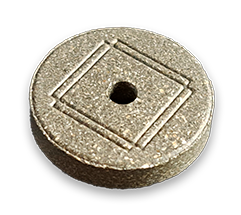
The holder is interesting.
The back of the sampler informs you shouldn’t wash it because it’s made of pressed earth and would dissolve on contact with water.
One side of the holder bears a simple, geometric design, the other has the inscription ‘Shoyeido · Japan’. It’s precisely the size of a two-€-cent coin.
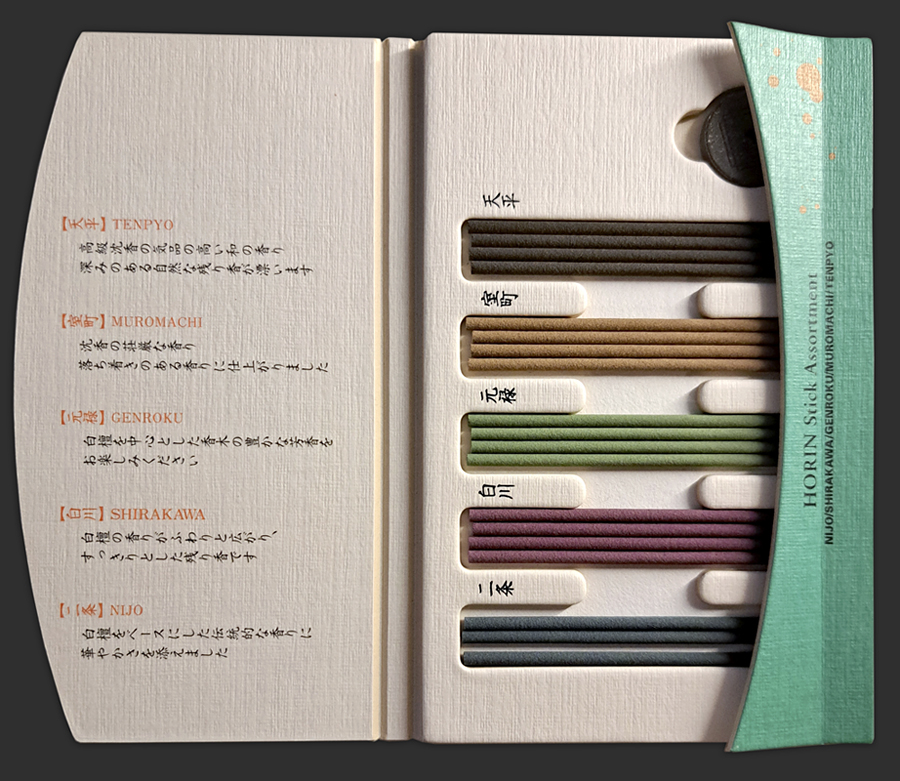
The set looks bigger in the photos than it actually is. The pack is 9×14cm—a bit smaller than a postcard.
The photos of the sticks below are shown slightly enlarged relative to the pack.
I’ve sorted the reviews by price: from least to most expensive.

Nijo · Avenue of the Villa
The raw smell is vanilla-sweet, with a hint of a camphor note.
With Nijo, a warm, cosy smell spreads through the room. It has a certain gourmand character, to which the vanilla note contributes a lot.
I also find an earthy aspect in the scent, and sometimes camphor seems to poke through.
Overall, I’d say Nijo fits quite well into the scent genre ‘amber’.
Reviews like this old ORS article describe a floral component in Nijo that I can only find to a certain extent. If I really focus on it, I sense something perfumey, but it isn’t a clear florality to me. It feels more like the residual smell in a bathroom cabinet where perfumes are stored.
I find the scent of Nijo pleasant but unspectacular.

Shirikawa · White River
Shirikawa has an intensely creamy-sweet cold throw with a vanilla tone.
This variety strikes me as a heavily sweetened sandalwood scent with a cinnamon note. As in Nijo, I find vanilla, and the sweetness at times seems downright sugary, which evokes an association with cotton candy (candy floss, for you lovely UK people out there).
To me, Shirikawa has a hard-to-grasp floral aspect. In fact, the smell reminds me of the general character of many scents from Mother’s Nagchampa line.
On top of that, Shirikawa has a distinct woodiness and an earthy undertone in the background. Occasionally, a hint of camphor joins in.
To me, the smell of Shirikawa is the sweetest of this line.

Genroku · Returning Spirit
Genroku is sweet, but much less so than the previous varieties. The raw smell has a kind of curry note, which continues in a milder form when burning. The smell is very umami, which at first made me suspect that the variety contains some agarwood; Shoyeido’s description doesn’t mention any, though. Instead, the text only speaks of “aged woods and fine herbs”.
The umami aspect reminds me a little of White Cloud (the Japanese version); however, Genroku have more sweetness. Moreover, there’s a really fine bitter note, which is not present in White Cloud.
Genroku comes across as a hybrid of the sandalwood-based and the agarwood-based varieties of the Horin line.
I’m writing this while burning the last of the four samples, and I have to admit that I still don’t quite understand Genroku. For example, I can’t make up my mind whether I find the smell green or not.
What I can say for sure is that I like the smell; I find it cosy and relaxing.

Horikawa · River Path
Horikawa is the only variety that isn’t part of the Horin sample set. Why that’s the case is beyond me.
I got 5 Horikawa sticks from Povilas, also in 2023.
Horikawa and Shirikawa are closely related, which is also pointed at by the fact that Shoyeido’s description of Shirikawa refers to the other one.
When I initially sniffed the raw sticks, I was reminded of gingerbread. The smell is quite intense, packed with spices, has an almost chocolatey, tart sweetness, but also a pinch of camphor.
Lit, the association disappears entirely, although the smell is still strongly characterized by baking spices. The other main aspect of Horikawa is its rich sandalwood note, which comes out remarkably creamy.
The scent is again sweet, but more restrained than the previous ones in that regard.
It surprises me that the product description mentions frankincense as an ingredient. I wouldn’t have guessed that.

Muromachi · City of Culture
In addition to the sticks out of the sampler, I got 5 sticks of Muromachi from Povilas. They smell identical.
The raw sticks smell sweet and umami, with a curry-like spiciness. You can make out a little agarwood.
Muromachi has a quite robust smell.
The scent has a very clear agarwood presence and reminds me of White Cloud (even more than Genroku does), although Muromachi has a noticeably denser, richer smell then White Cloud.
Like Genroku, Muromachi is sweet, but less so than the other varieties discussed so far. Again the sweetness is of a gourmand kind, but paired with a distinct umami note and a spicy aspect reminiscent of curry or, more specifically, fenugreek.
The deep, balsamic agarwood smell comes with an aromatic bitter note. I detect this most clearly when I’m in the same room as the burning stick. Further away, in adjacent rooms, much more of the sweetness comes through, and I can make out a trace of sandalwood.

Tenpyo · Peaceful Sky
The raw smell of Tenpyo is spicy like baking spices, mixed with a savoury umami note. The agarwood is clearly noticeable.
Of all the varieties, Tenpyo is the one that feels least like a blend.
The sweetness so typical of Shoyeido is missing here entirely, which makes the scent appear mature and elegant. This is a strongly agarwood-focused scent, deep and calm like a quiet evening.
The aroma is tart, almost bitter, but also balsamic and soft, with a fine spiciness. I find woody and earthy notes that at times even smell a little mushroomy.
Furthermore, an association with pipe tobacco keeps coming up.
An extremely subtle, inherent sweetness appears when the smell mixes with fresh air, or can spread into adjacent rooms.
Conclusion
When I started burning the Horin line, I thought: “Oh no. More sweet-spicy Shoyeido incense that all smells the same!” However, by now, that impression has been put into perspective.
To a good extent, the scents do repeat the general, often very sweet Shoyeido character, but in the Horin line they do so at a noticeably higher level of quality. To me, the varieties stand out through very clear sandalwood and agarwood notes respectively, which aren’t present in that way in the ‘Dailies‘, the Magnifiscents or Overtones lines. The Horin scents are rich and of a complex depth.
Compared to the other varieties, I find Nijo rather restrained; they don’t dominate the room the way the others do. I catch myself forgetting about them when I get distracted by something. The short sticks burn down unnoticed in the background quickly. It doesn’t surprise me that the coils are a popular option.
With the other varieties I don’t feel the shortness is as much of a drawback, but I do occasionally wish they’d burn just a few minutes longer.
The general favourites seem to be Nijo, the closely related Shirikawa and Horikawa, as well as Muromachi.
To summarize my impressions:
- Nijo was the weakest of the varieties, and not just in terms of potency.
- Shirikawa has the most intense, most gourmand sweetness, although the smell also has a floral side.
- Horikawa has the richest sandalwood smell, but is also spicy and sweet.
- Genroku comes across as a hybrid between the sandalwood-focused varieties above and the following agarwood-based varieties, and has a strong umami character.
- Muromachi has a robust scent of agarwood mixed with sandalwood. It’s spicy and sweet, but less so than the varieties above.
- Tenpyo is a serious agarwood scent that entirely lacks the typical Shoyeido sweetness. Its scent appears deep, calm and elegant.
My favourites are Horikawa, Muromachi and Tenpyo, with Muromachi in first place.