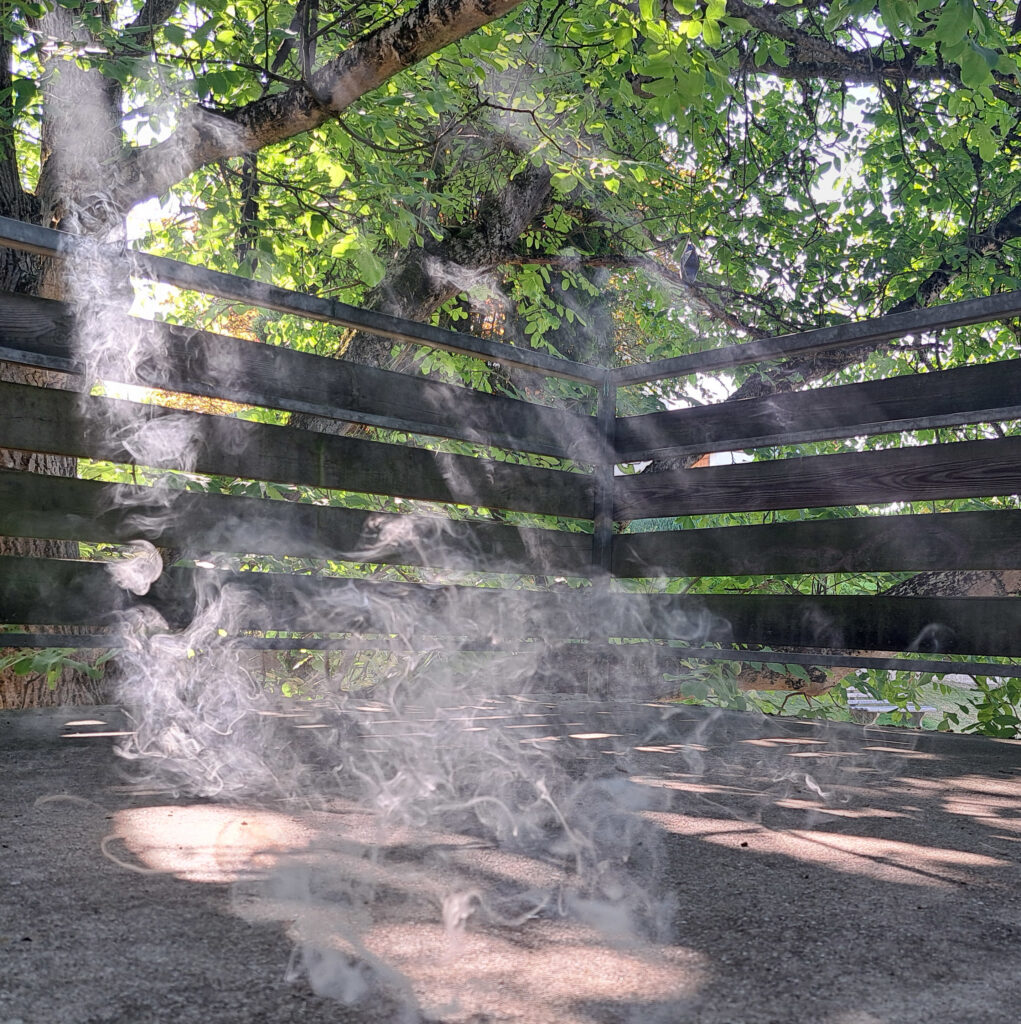
Sambrani Cups
On a lazy Saturday, I once again spent an afternoon on my balcony; this time with 3 different Sambrani Cups that I got from Sascha, and Steve respectively.
Although cup Sambrani is a very common type of incense in India, here it tends to fall under ‘curiosities’.
These are resin-filled ‘cups’ (a bit smaller than a shot glass) made from charcoal, cow dung, or a mixture of such combustible materials. They’re lit at the top edge and then burn slowly downwards, smouldering the resin inside.
Because the charcoal cups seem to light relatively easily, I’d feared they’d be like the quick-light charcoal tabs used for incense or hookahs. Fortunately, this isn’t the case. However, it can’t be ruled out that some contain a kind of accelerant.
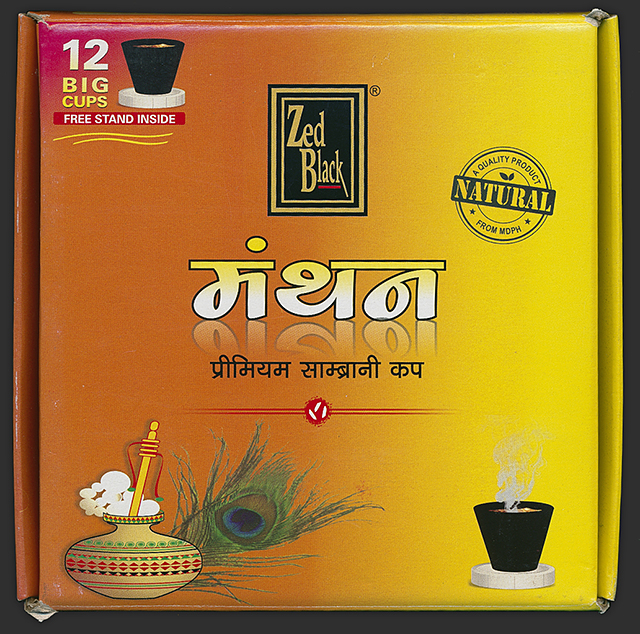
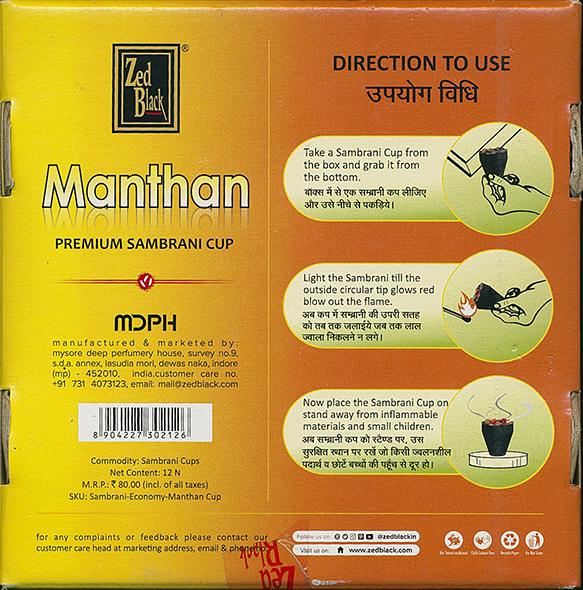
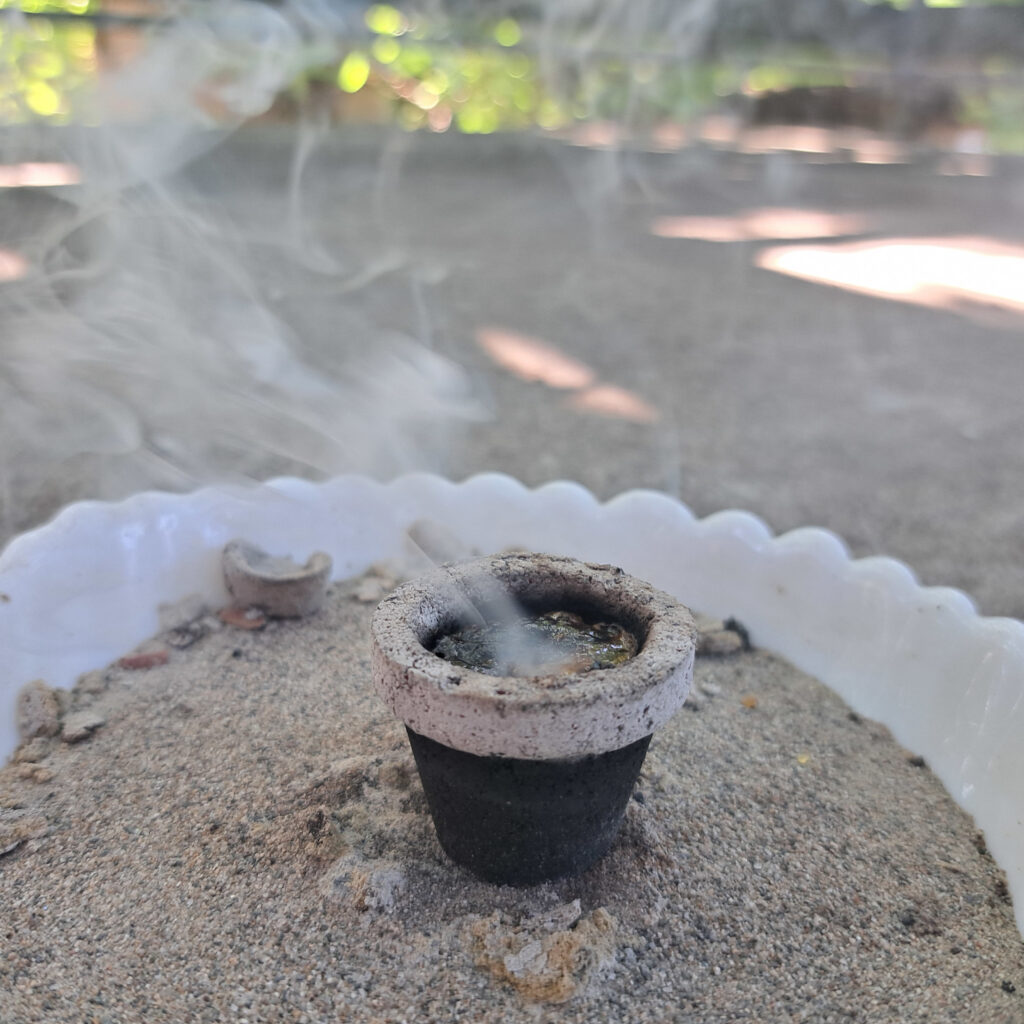
Zed Black – Manthan Sambrani Cups
This sample comes from Sascha; I got it in 2024. He sent me a Sambrani Cup along with its packaging. The box contained some resin crumbs that had come loose, which I ended up using to get a better insight on the filling’s composition.
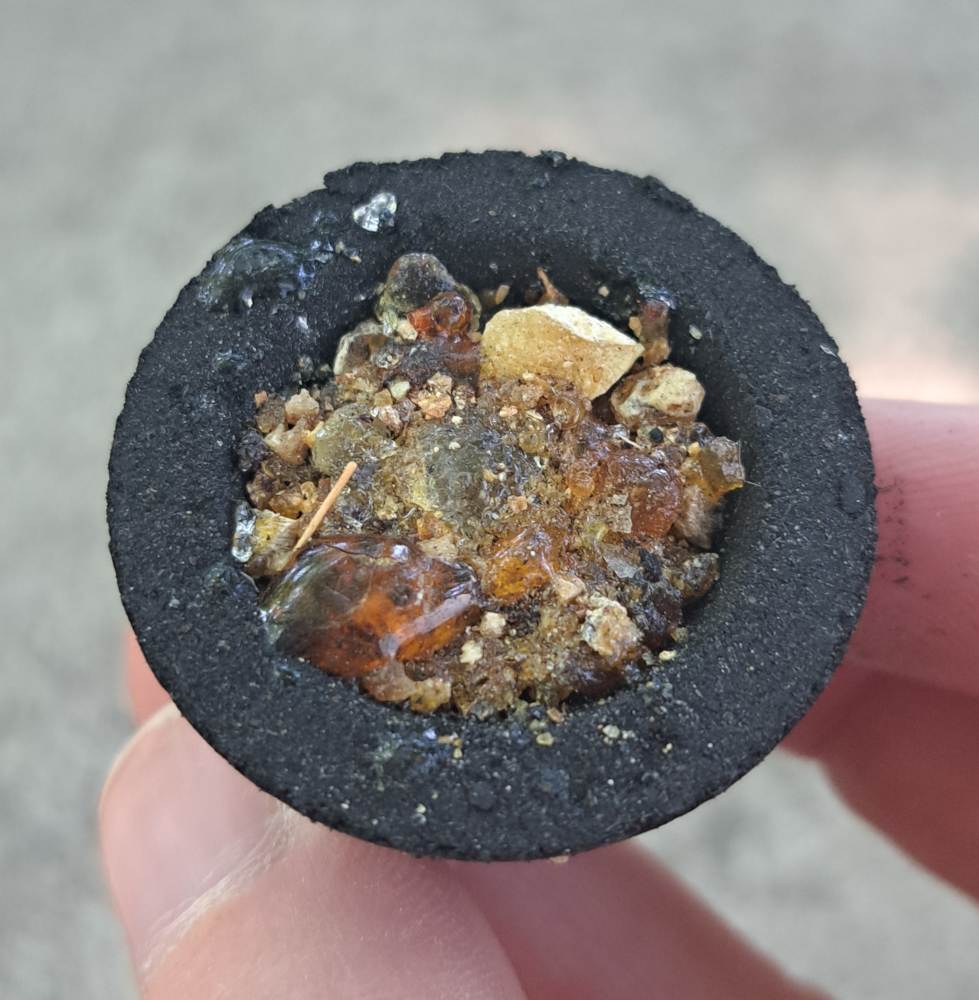
The resins were somehow fused, which also glued them to the cup.
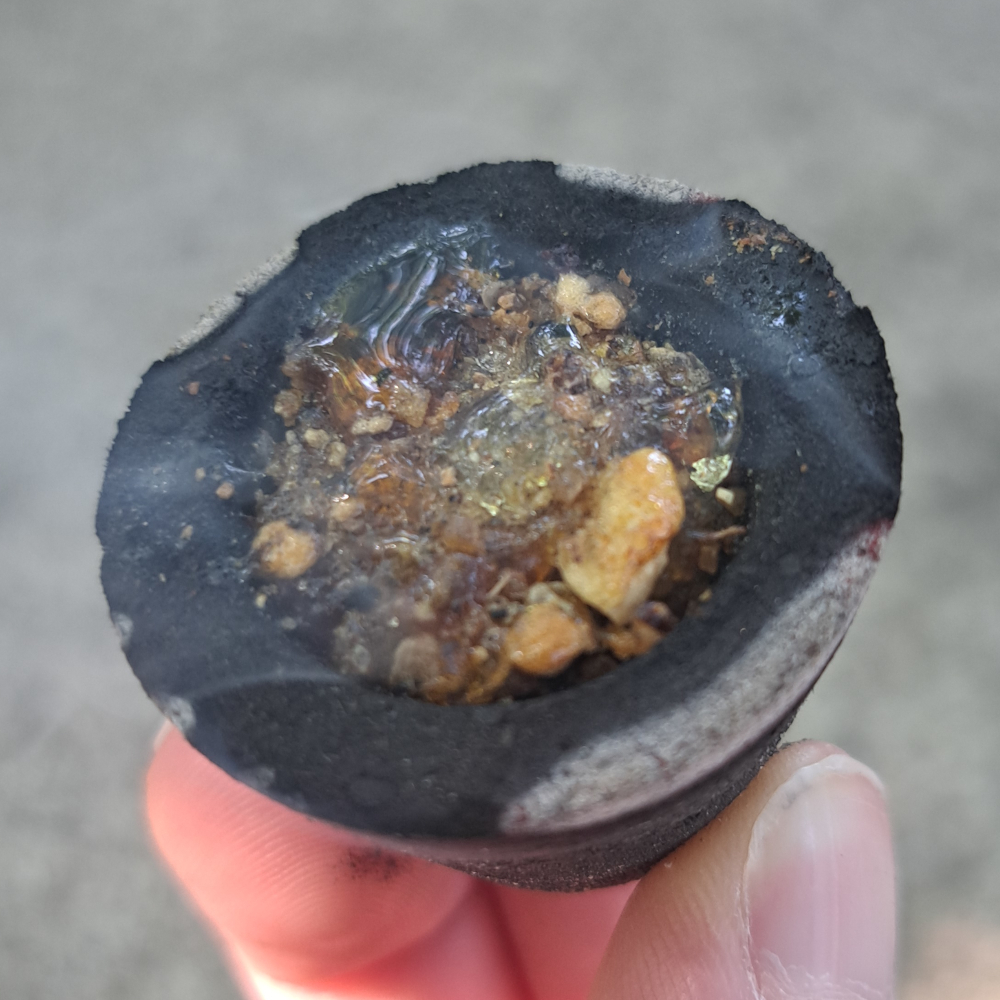
I lit the top edge of the cup bit by bit with a normal lighter, until it had caught an ember in 3-4 spots.
A fair amount of smoke is produced right away, even before the heat has reached the resin.
The smell of the charcoal isn’t very ‘pure’. It seems another combustible material has been mixed into the charcoal. The charcoal is also noticeably finer than with charcoal tabs.
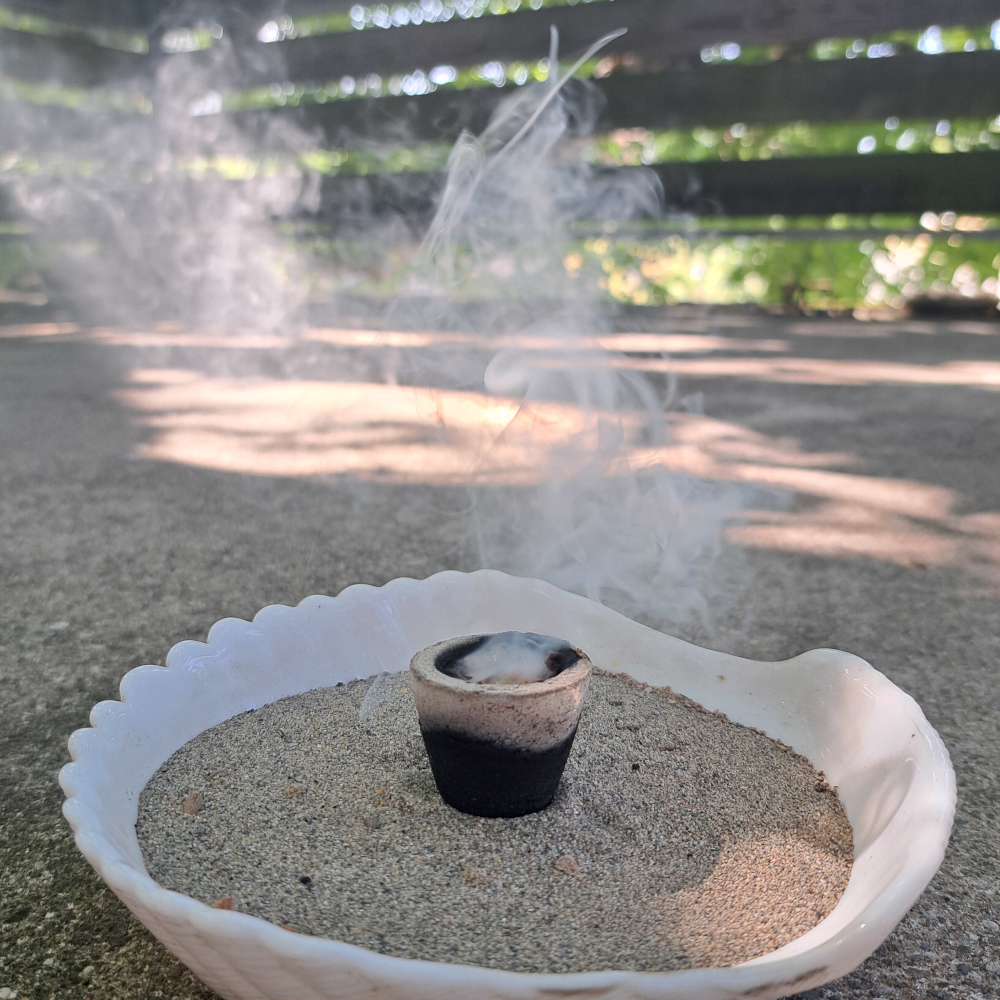
After a few moments, the resin starts to steam and a distinct benzoin note rises, mixed with the smell of cheaper frankincense and a general resinous tone.
Over time the sweetness of the benzoin fades, the smell becomes more resinous and slightly woody.
Later on, the usual off-notes of burning resins, or rather their gum content, set in as well.
The cup hasn’t lost much substance by the time the resin is already used up.
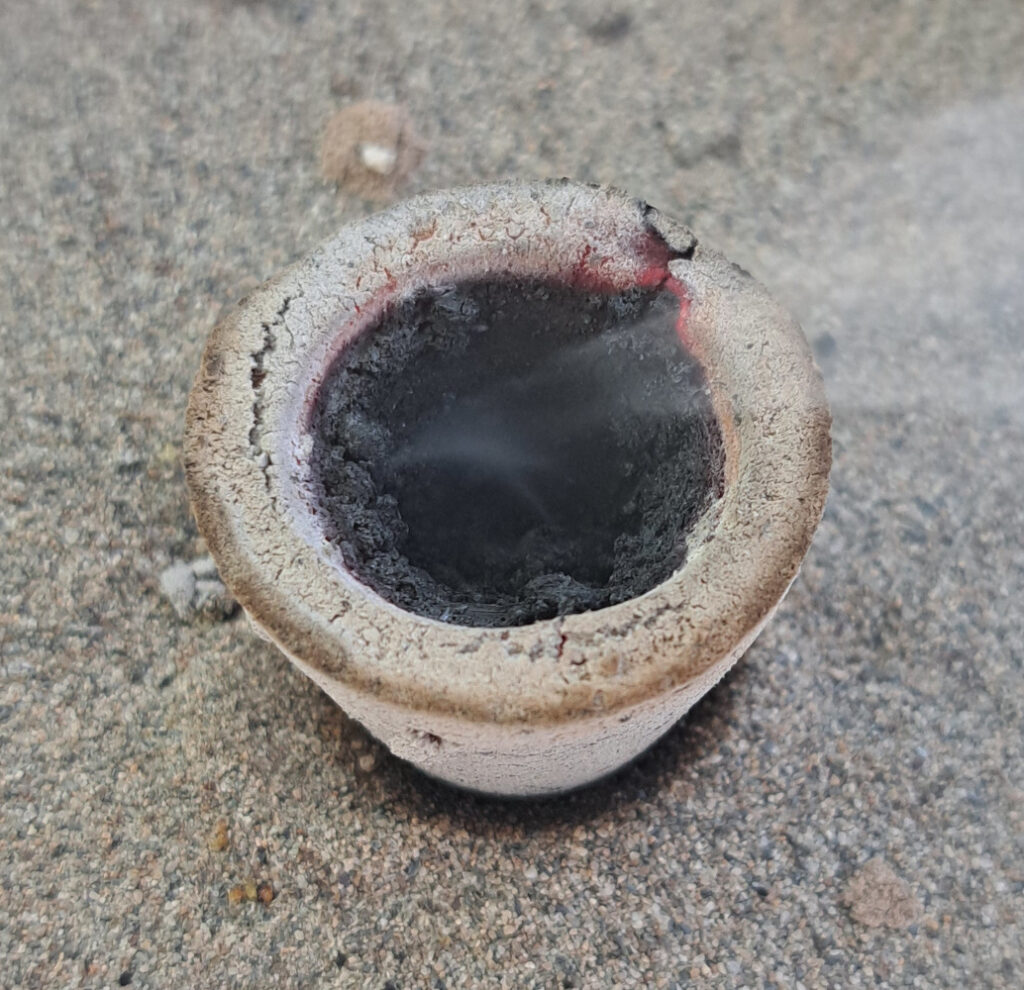
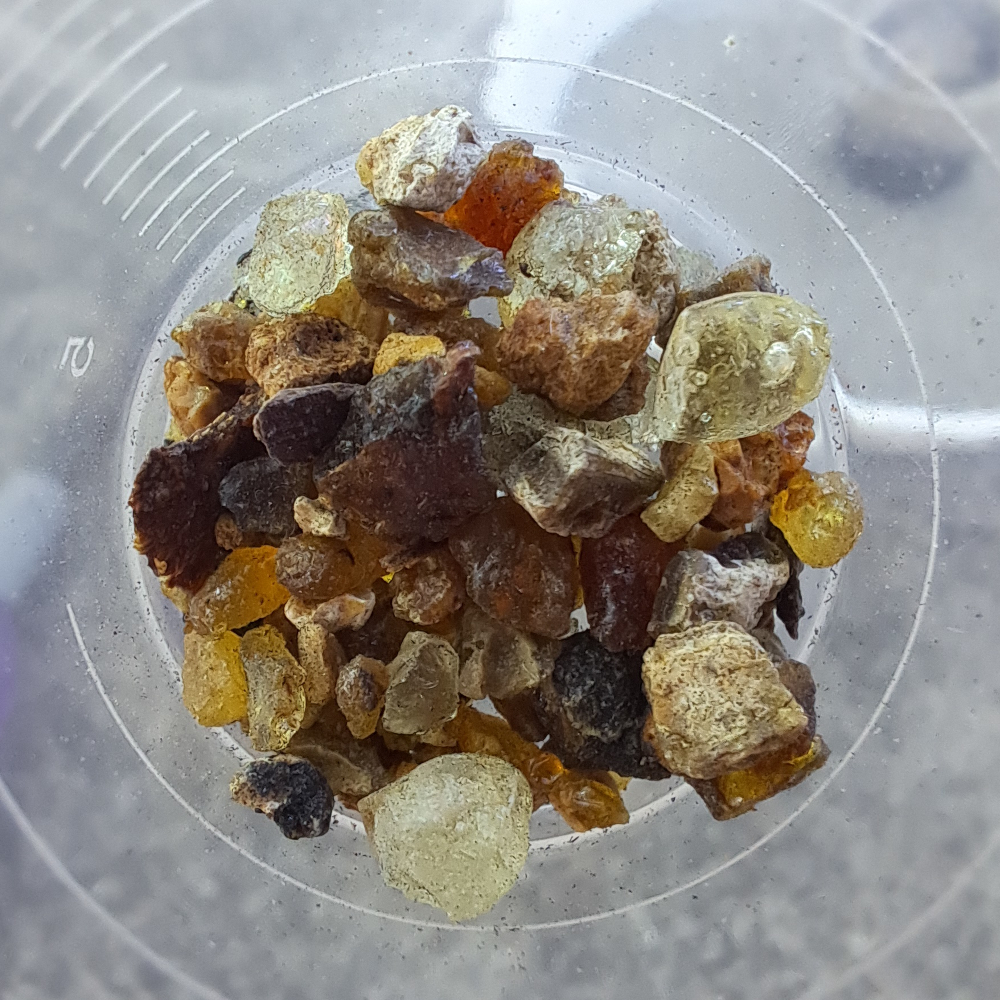
Placing individual grains of resin on the embers, I find:
- Dammar (light)
- Indian frankincense
- some Commiphora relative (myrrh), some of the resin bits are relatively light, almost orange
- a brown resin, probably Dammar Batu (aka Sal)
To my surprise I couldn’t find any benzoin; even when I emptied the rest, along with the small crumbs, into the cup, the smell was much tarter than initially.
Maybe there wasn’t any benzoin left in there by chance, or it had to do with how the resins are glued together to keep them in the cup.
Raj – Guru Vandana
This Sambrani Cup was sent to me by Steve in 2025.
He apparently bought them via Amazon from the German company LuxFlair, who mainly sell perfume-dipped incense sticks by Raj.
The Sambrani Cups no longer seem to be available in their shop; I can only find a (dipped) incense stick version of this scent.
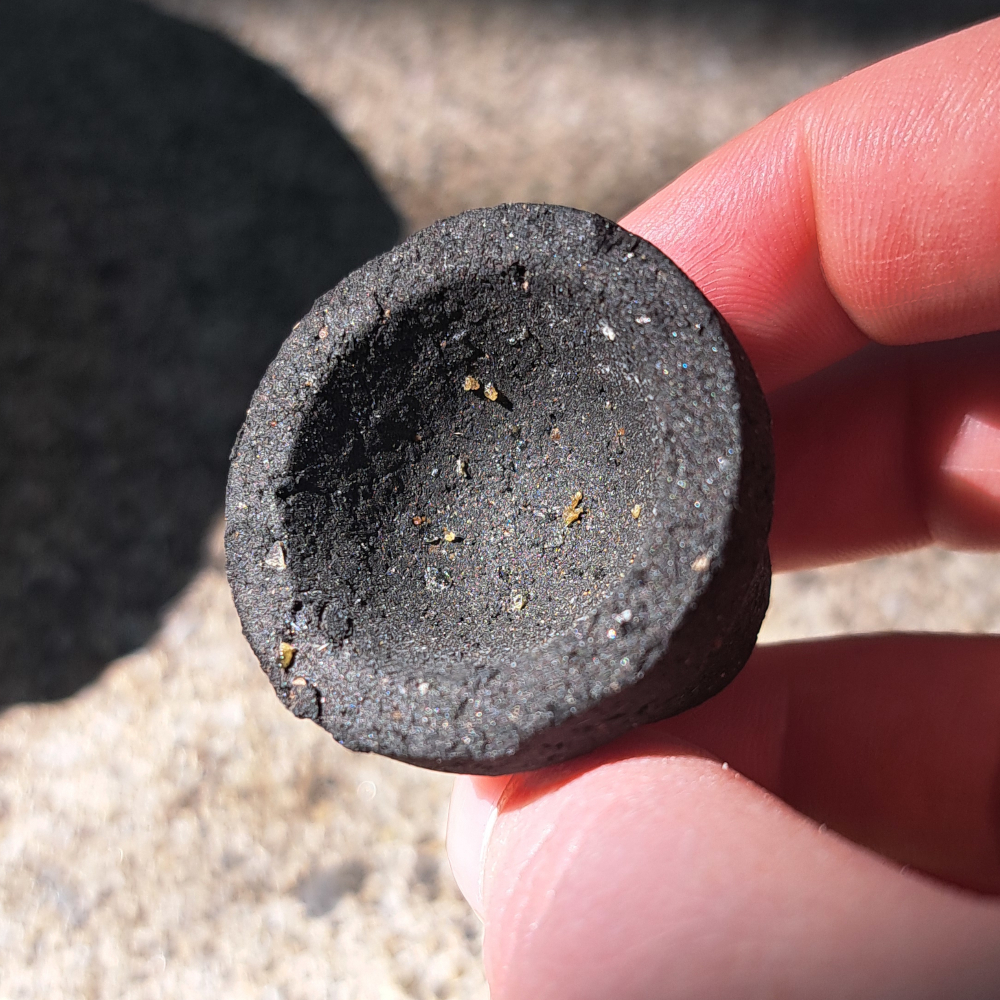
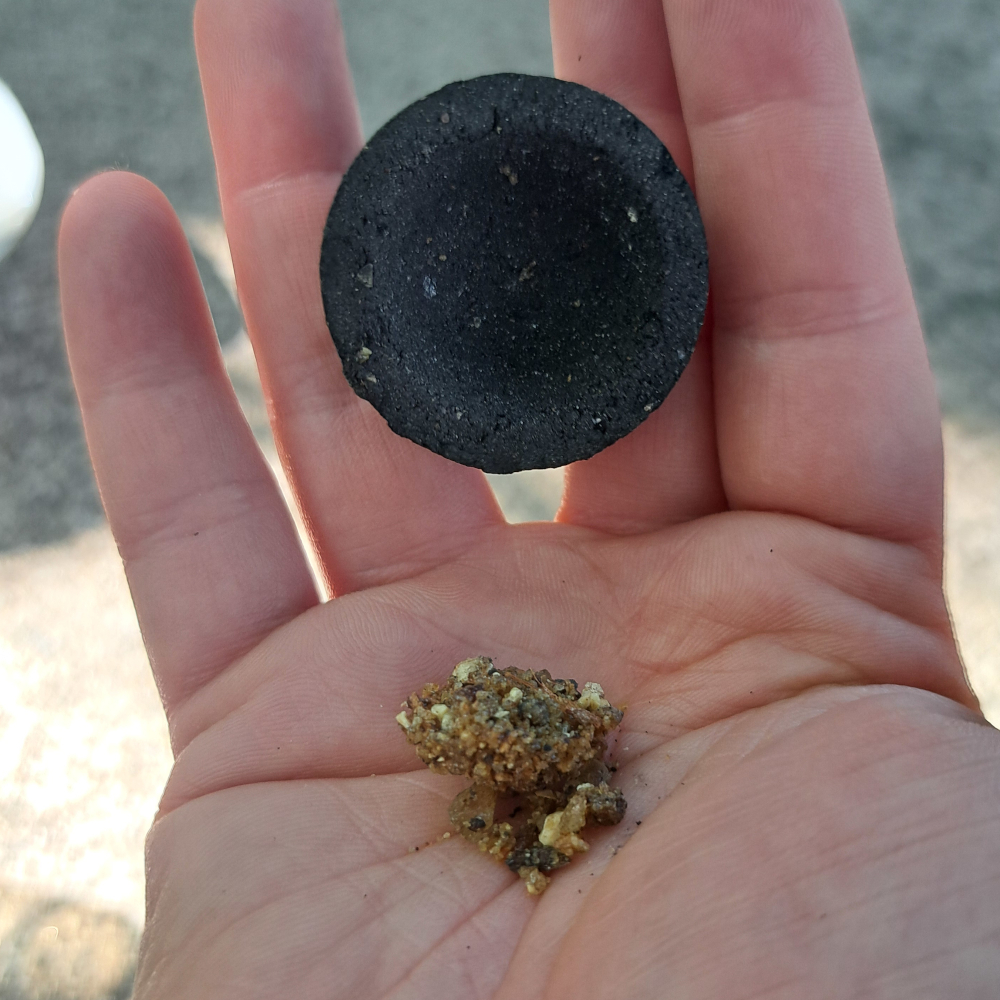
Lots of cup, little content.
I lit the cup without the filling by placing the remaining embers from the previous cup on top of it. Steve writes in his review that the cups were very hard to light; lighter or match wouldn’t work.
While lighting it, I noticed that even the charcoal gives off a strong perfumey smell.
I could imagine that the resins are soaked in or sprayed with a fragrance oil (which would also glue them together) and that some of the oil seeps into the charcoal. Or the charcoal is intentionally perfumed.
The smell of the charcoal is smoky and quite sweet. It reminds me of Mysore Sugandhi – Chandan Dhoop. It’s cloyingly sweet, with an artificial creaminess and a peculiar, wintergreen-like freshness.
When the resins are added, the scent makes me think of Parimal – Yatra, but Guru Vandana is nowhere near as good as those sticks.
The ember hasn’t yet reached the bottom of the cup by the time the resin mixture is completely burnt.
Of the three cups I used that afternoon, it’s the smell of Guru Vandana that clung to my T-shirt. Even its fresh note is still clearly noticeable on it the next day.
Aromatika – Navagraha
The second Sambrani Cup I got from Steve, again out of his package from mid-2025. Here’s his review.
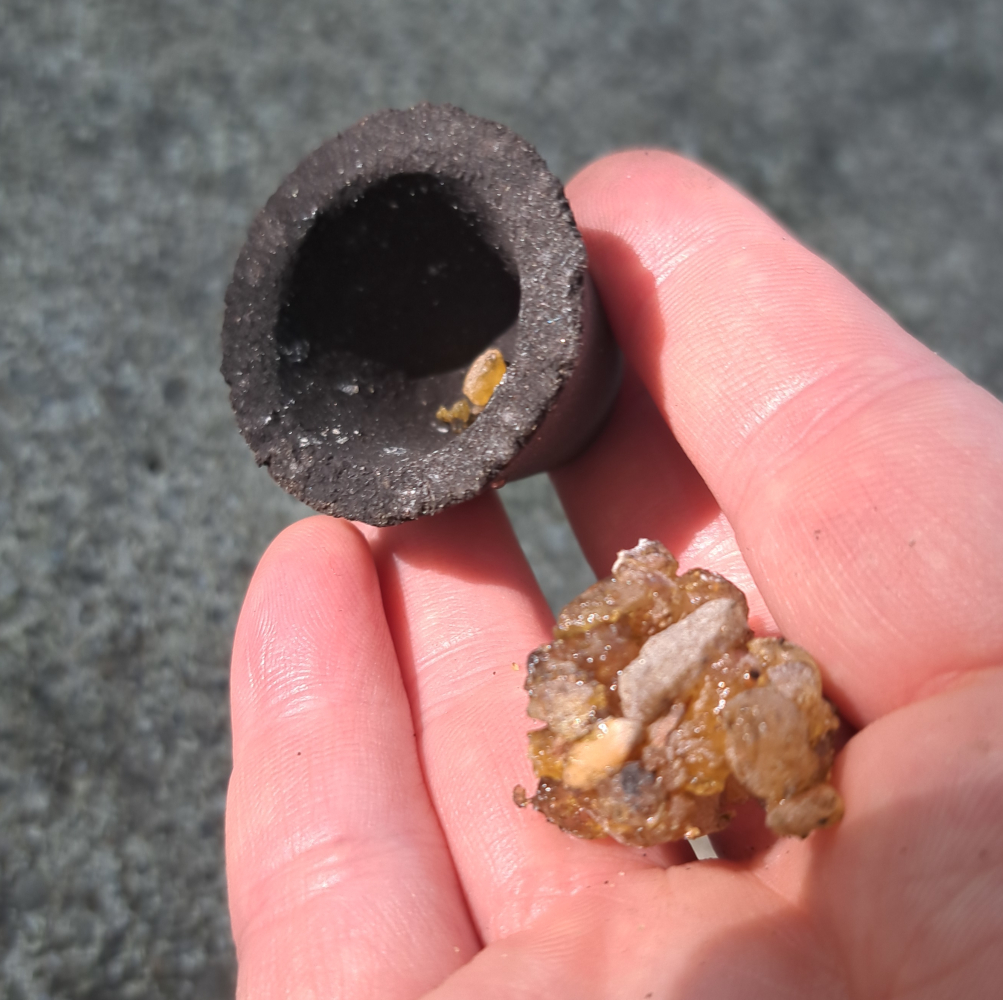
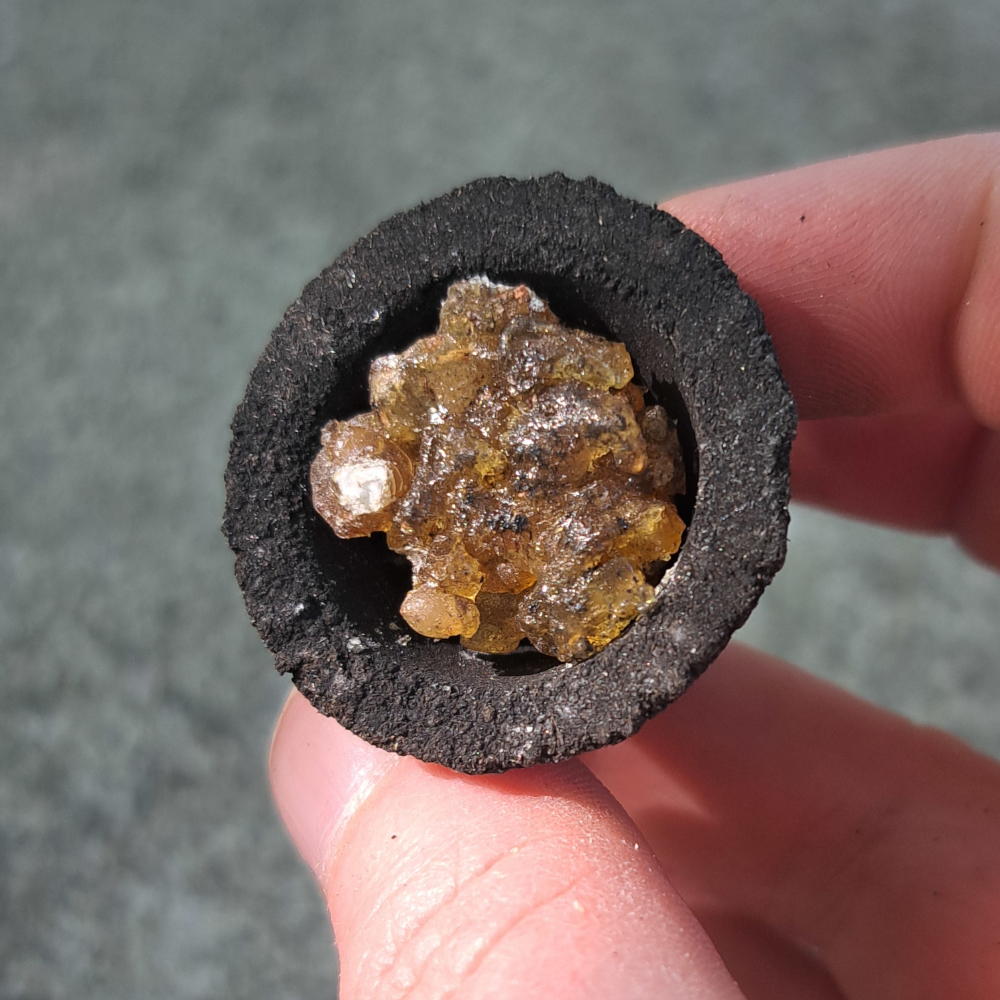
The resin was stuck firmly in the cup this time, but I managed to loosen and remove it. It’s glued together like the others, possibly through heating.
I tried lighting the cup at the edge with a lighter, but even when it started to smoke for a moment, the ember went out again shortly after. I then took the resin out again and placed the embers from the previous cup on this one. It took a while, but it worked eventually.
The smell of the charcoal is strikingly woody, as though the it had been mixed with a fine wood powder. The cup also seems to burn down a good bit slower than the previous ones.
The resin strikes me as pure Indian frankincense. It has the typical scent profile of cheaper B. Serrata: few citrus notes, but instead a balsamic and oily sweetness, a generally resinous character and burned, bitter off-notes from the resin’s high gum content.
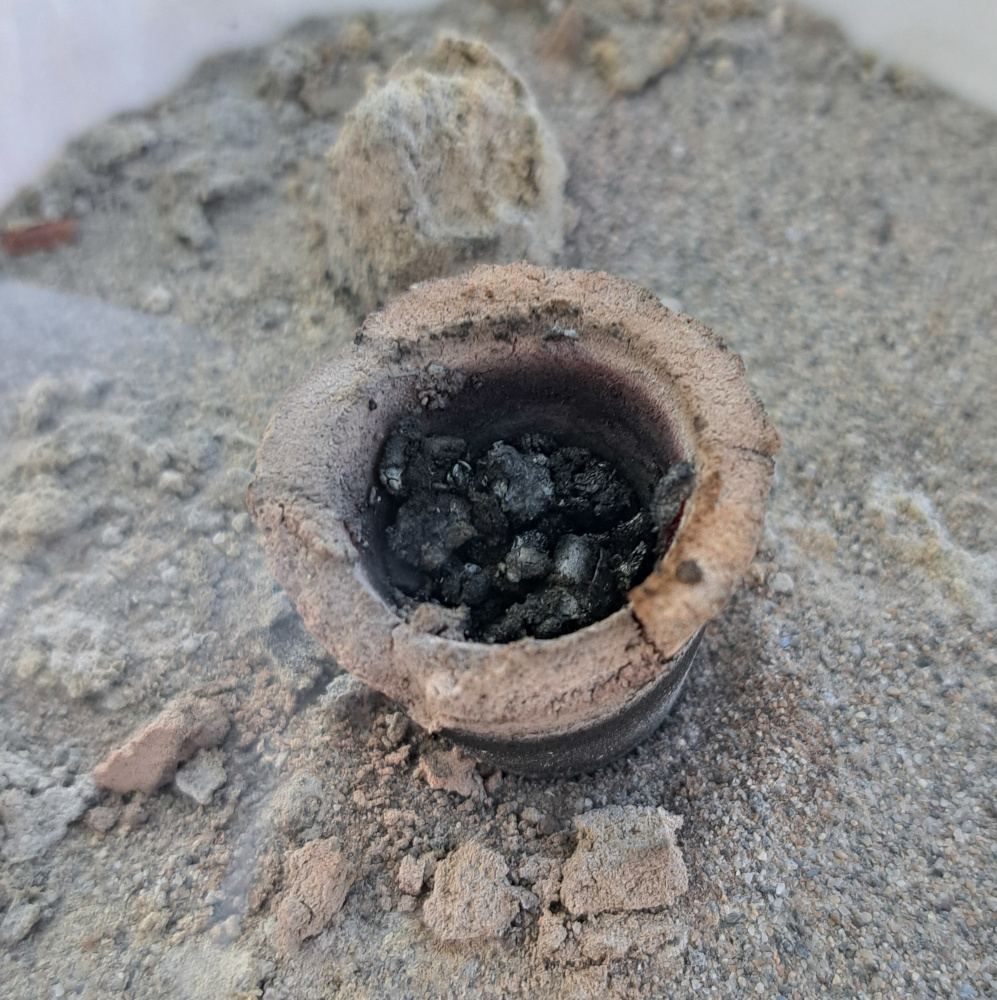
Charred crumbs remain in the cup: the resin’s gum content becomes visible, as it doesn’t melt.
The cup is only about halfway burnt down by the time the resin is spent.
Conclusion:
If you don’t want to use these cups to smoke-cleanse your house, they’re best suited for outdoor use, as the amount of smoke produced is enormous.
On the surface, the little, resin-filled cups seem practical, but the portion of resin they contain is used up quickly and the rest of the cup goes to waste, unless you have extra resin to refill it. But then you might as well just use normal charcoal and get it fully going beforehand, to get rid of its unpleasant smell.
The cup shape itself is practical, though. I’ve seen that you can buy these empty as well, which is an interesting alternative to the tab format. BERK sell them as “Charcoal Pots“.
Out of this selection, I liked the Manthan Sambrani Cups by Zed Black best because they contained an interesting blend of resins and the cup was relatively easy to light.
I found Raj‘s product the least appealing. The cup is a rip-off and I also didn’t like the synthetic perfume smell.
Aromatika – Navagraha is fine, but the cups really are a pain to light.
You shouldn’t expect high-quality resins from any of these products.